The network is the point; any single tower is just a link
When Genoa decided to wall Corsica against Ottoman and Barbary raiding, the engineering answer was not a fortress but a chain. Between roughly 1530 and the end of the sixteenth century, a series of watchtowers was raised around the island's coastline — eventually somewhere in the region of seventy of them, spaced so that each one could see the one before and the one after. The individual tower mattered only insofar as it held its place in that sequence. Break the chain anywhere and the system degraded; maintain it, and a fire lit on the Cap Corse could theoretically carry its signal around the whole coast in a single night.
That is the claim buried in the administrative language of the Genoese Officium di San Giorgio and its successor bodies: that the network could propagate a warning at speed. Speed, in the sixteenth century, meant faster than a raiding fleet could row. A galley working the coast needed time — to beach, to form up, to harry a village and reload. The towers, in theory, could outrun it with light alone.
How sightlines organised the shore
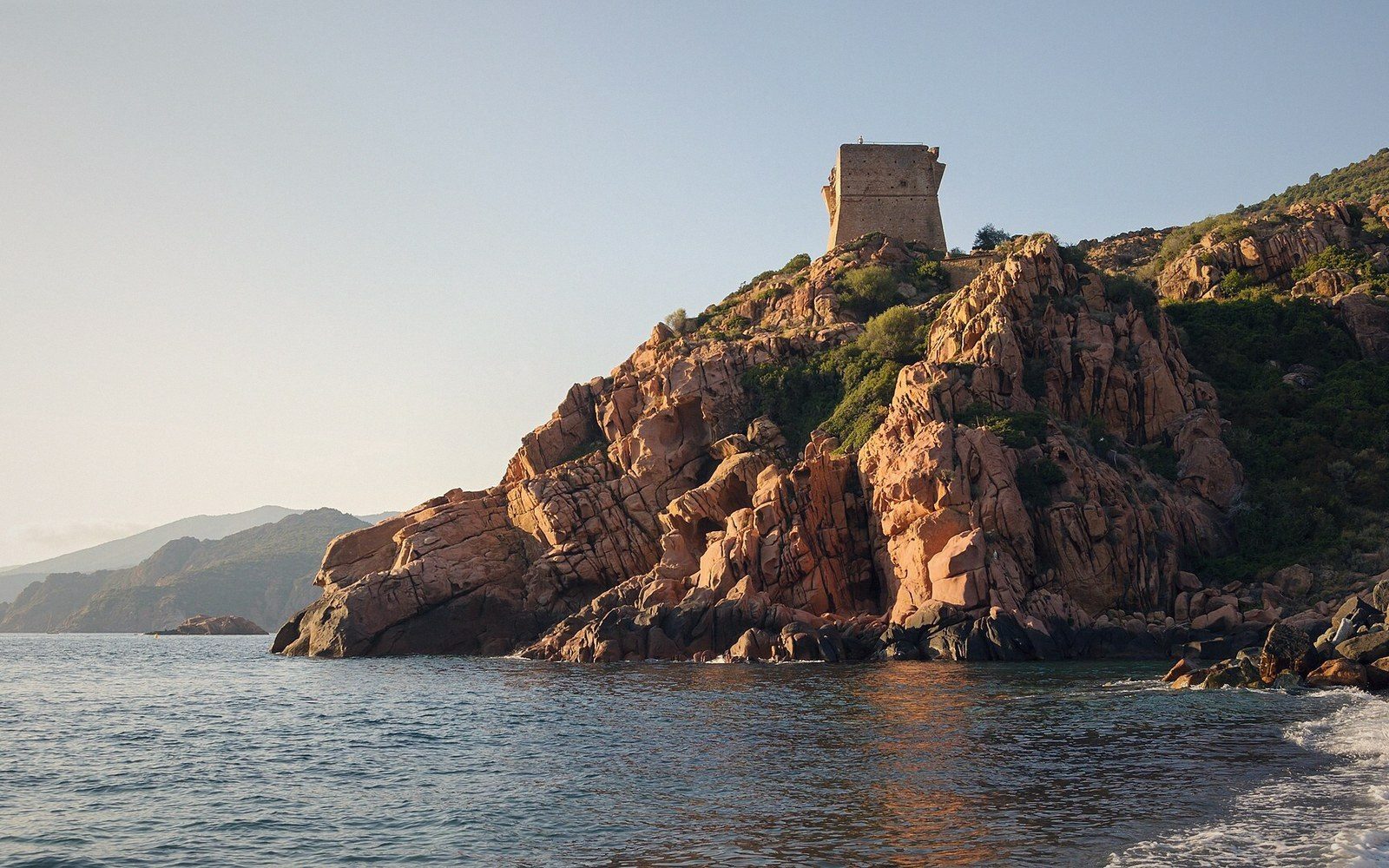
The logic of the chain forced the towers into positions that have almost nothing to do with habitation and almost everything to do with optics. A tower went where it had to go to see its neighbours. That meant headlands, offshore islets, the brows of capes — positions sometimes fiercely exposed, chosen not for shelter but for horizon. Where a convenient headland happened to exist, the builders used it. Where it did not, they built on a site that looks, to any reasonable eye, unnecessarily punishing. Weather, supply, the difficulty of maintaining two or three men through a Corsican winter: these were secondary concerns. The sightline was sovereign.
The practical consequence is a coastal map that reads as a sequence of calculated interruptions. Each tower sits just far enough from the last that a signal fire is visible but close enough that there is no doubt about the source. Gaps in the coverage — and there were some, forced by the geometry of certain bays or by budget shortfalls — show up in the archive as recurring complaints: this stretch had no tower, that cape was unguarded, merchants sailing close inshore passed through a blind reach. The Genoese administration adjusted the network several times over the course of the sixteenth century, adding towers, occasionally relocating a position that had proved unworkable, responding to the evidence of raids that had not been anticipated.
The siting decisions that put a tower on one headland rather than another were not guesswork. Surveyors — the term the records use is commissari, commissioners — walked the coastline and tested intervisibility before a foundation was laid. Where two possible sites existed, the one that added most to the chain's reach was chosen. The mathematics of this is simple enough once articulated; the achievement is that it was done consistently, over a coastline that is deeply indented and topographically complex, with instruments that were rudimentary by later standards.
Signal, not message
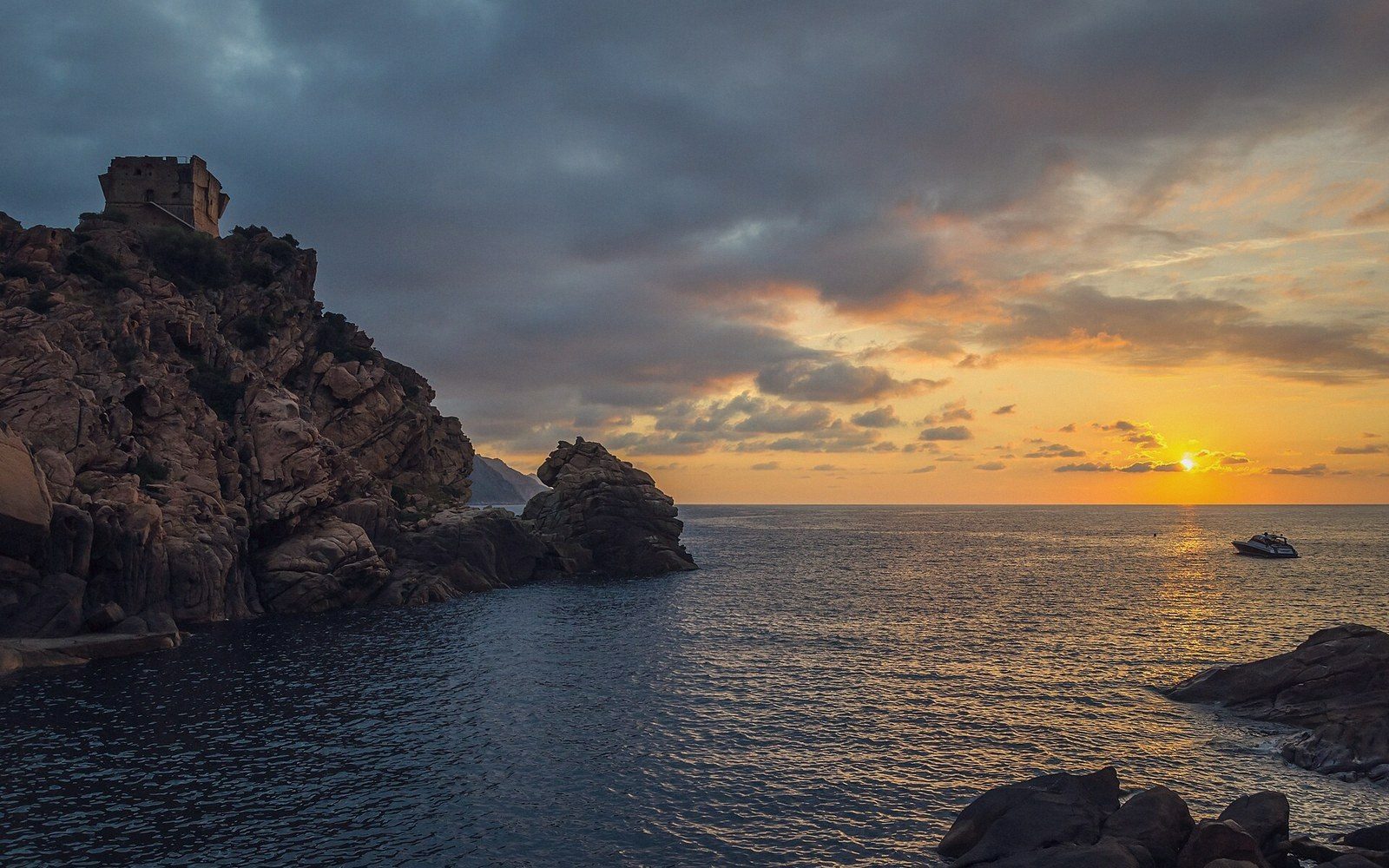
A fire carries information of exactly one kind: something is happening. The signal that passed along the Genoese chain was not a message in any nuanced sense; it was an alarm. It told the next post that something had been seen, and that post relayed the alarm onward. By the time the signal reached a garrison town — Bastia or Ajaccio, say — the actual content had not increased. What had increased was the radius of awareness.
This matters for understanding what the network was and was not. It was not a communication system capable of transmitting the size of a fleet, the direction of approach, the likely target. The garrison at the end of the chain knew that something had triggered the alarm at the far end; they did not know what. The tactical response — mobilising militia, preparing defences, alerting coastal villages — was therefore necessarily generalised. The towers bought time and awareness, but the interpretation of that awareness was entirely local.
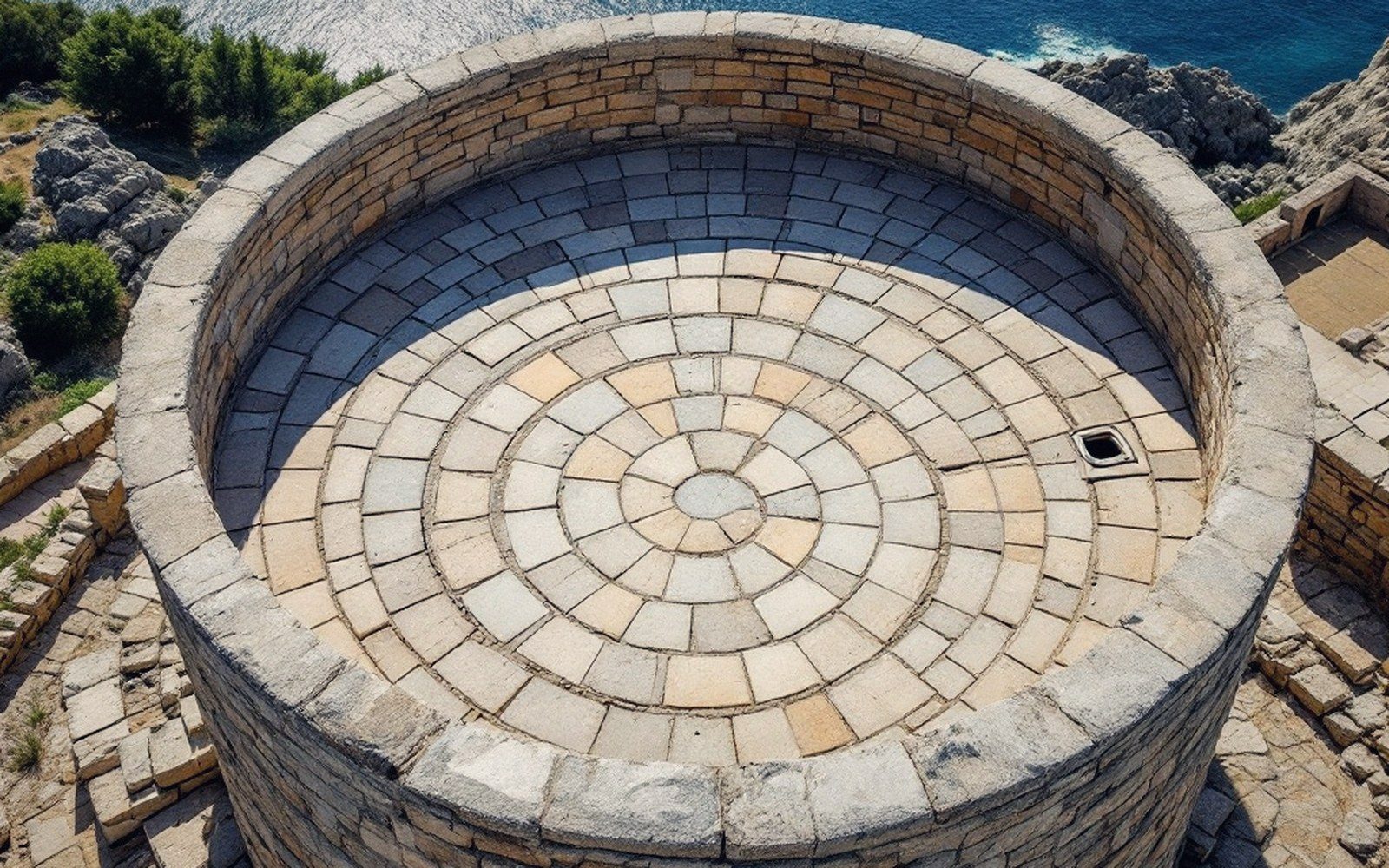
The men responsible for maintaining the signal were not soldiers in any formal sense. A typical post was staffed by two or three men drawn from the local area, poorly paid, supplied at intervals that the records suggest were frequently inadequate, and operating under rules that required one man to remain on watch at all times through the night. The physical conditions of that watch — a small vaulted chamber, a platform open to whatever the sea threw at it, no comfort, no company beyond a colleague — are written into the architecture in every detail. The towers were not built for the ease of the garrison. They were built for the sightline.
What the chain looks like now
The towers that survive — and a substantial number do, in varying states — are most legible as a system when seen from the sea or from a high inland position. From the coast road, you encounter them one at a time, each apparently self-sufficient, each reading as a local landmark. The chain's logic only reasserts itself when you take a position from which two or three towers are visible simultaneously, and you see that the spacing is neither random nor merely convenient. It is calculated. Each tower stands in the best position from which it could do its job.
Some sections of the chain survive almost intact. The Cap Corse, the long northern peninsula, preserves its towers at close enough intervals that the relay logic is still fully legible: standing at one, you can see the next without difficulty, and the next one after that if the air is clear. On the west coast, where the topography is more complex and the cliffs steeper, the chain required more careful placement and shows more clearly the work of the commissioners who planned it — towers perched on positions that look, from a distance, almost inaccessible, but which prove on examination to have been chosen for exactly one property: they can see, and they can be seen.
That is the whole principle. The tower that cannot be seen from its neighbours is useless. The tower that can be seen from two neighbours, and that can itself see them clearly, is worth whatever it costs to build and to man. Genoa understood this. The system they built encircled an island in fire and sight, and any single tower, standing alone on its headland, is only fully explained by the ones you cannot quite see beyond it.
Signal and Stone is an independent publication about vernacular building and the organisation of landscape. It is not a tourism body and carries no affiliation with any visitor or heritage authority.