The threshing floor was built where the wind blew, not where the grain grew. That single rule shaped everything about its position.
The wind's terms
A threshing floor — aghja in Corsican, the word cognate with the Latin area — is useless without a reliable breeze. Grain beaten from its ear on a still day simply falls back to the stone; the chaff must be carried off by moving air, separating waste from food. The farmer who built the floor had no choice but to go where the wind went, and in Corsica that meant reading the landscape as a meteorologist before touching a single stone.
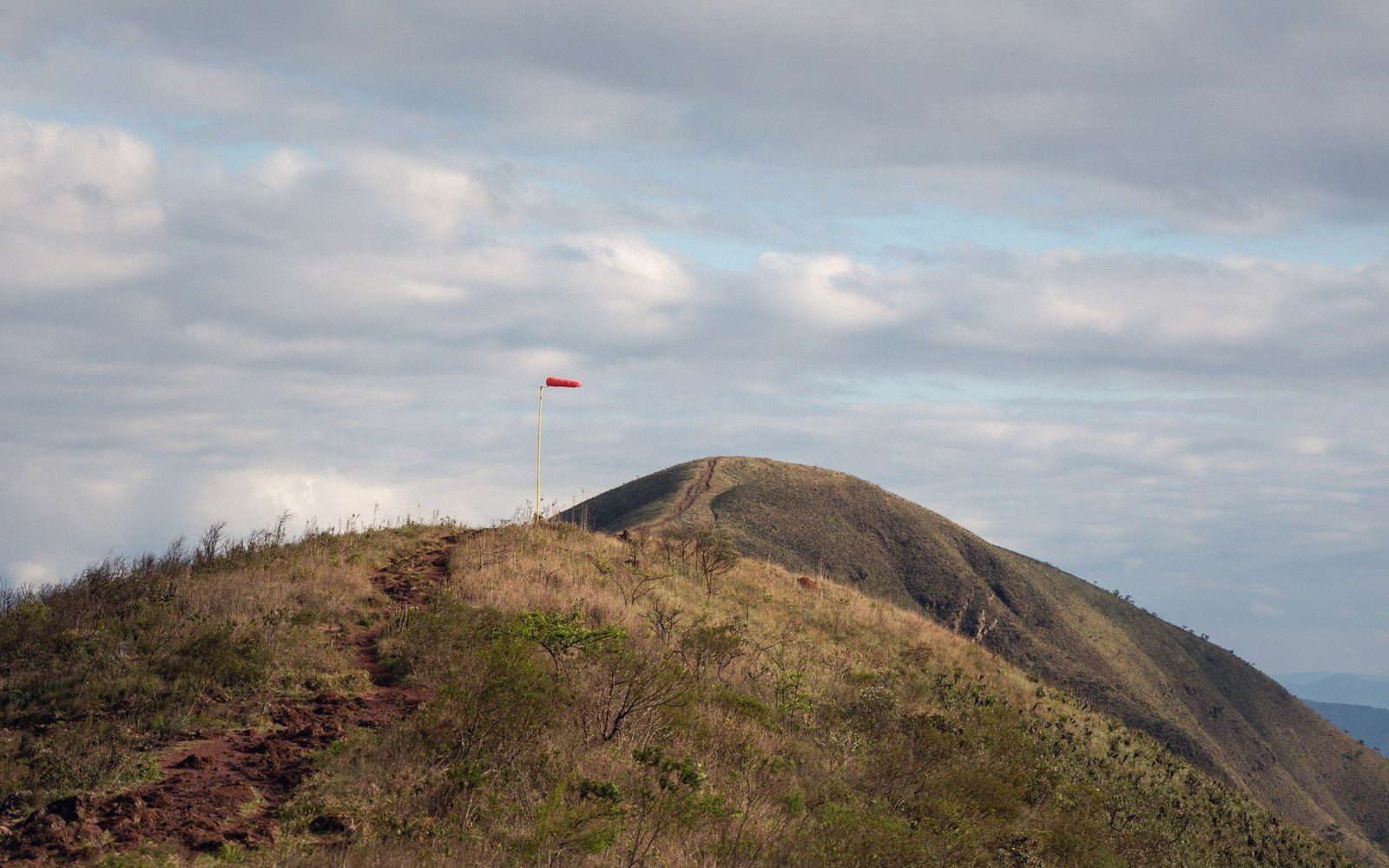
The typical position is a spur, a bare shoulder of ground where the hill drops away on at least two sides. Nothing interrupts the approach from the prevailing direction — usually northwest on the western slopes, southeast on the eastern — and the open fall below allows the thrown grain to arc through a column of clean moving air rather than tumble against a wall or into a hollow. The site is found by observation over seasons, not chosen from a map. Grandfathers knew which knoll caught the afternoon breeze reliably; that knowledge was structural, as precise in its way as knowing how to split granite.
The consequence is a floor that can look almost perversely placed: away from the village centre, on a headland that offers no shelter, sometimes a stiff climb from the nearest barn. Convenience mattered less than function. You carried the sheaves up; you did not build the floor somewhere comfortable and then wonder why the chaff came back to you. In some villages the paved circle is sited so close to a bluff edge that the drop is immediate — not recklessness but precision, the fall serving as part of the winnowing mechanism, letting gravity assist the wind.
Elevation also matters in a subtler sense. Ground-level air is disturbed by terrain and vegetation; a few metres of height smooths the flow. The floor's slight convex crown — it is never quite flat — drains rain quickly and also ensures that harvested grain piled at centre meets the breeze rather than shelters from it.
The result is a building tradition organised by weather. Stone, labour and the grain harvest were all negotiated with the wind first.
Signal and Stone is an independent publication about vernacular building and landscape in Corsica. It is not a tourism body.