One stone, one span
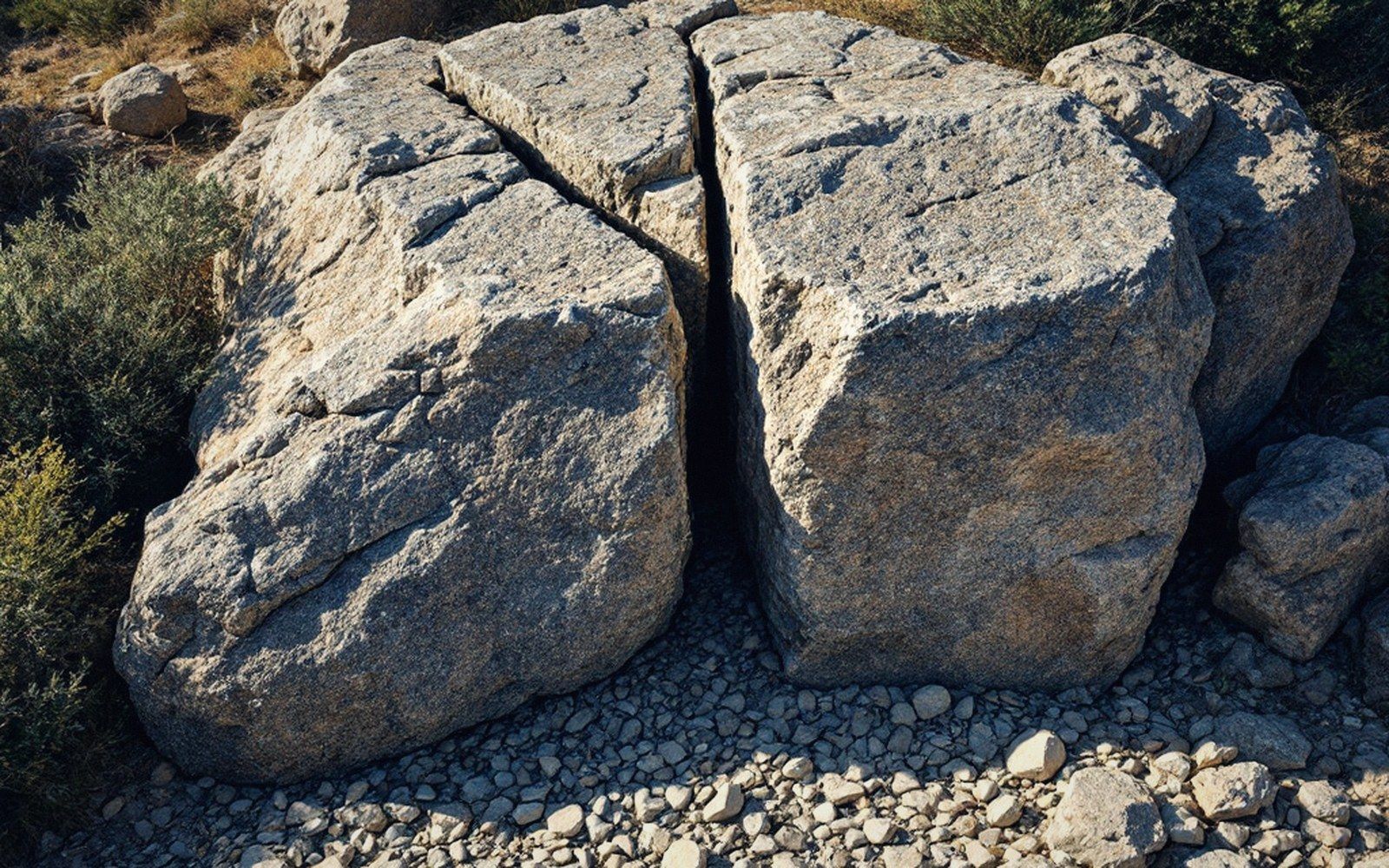
A window cut into a granite wall begins and ends with what the quarry will yield. The lintel — the single stone laid flat across the top of any opening — is not decorative; it is the structural fact that determines everything about the window below it. How wide that window can be is set not by the mason's preference but by the longest sound piece of granite he could split, carry and place.
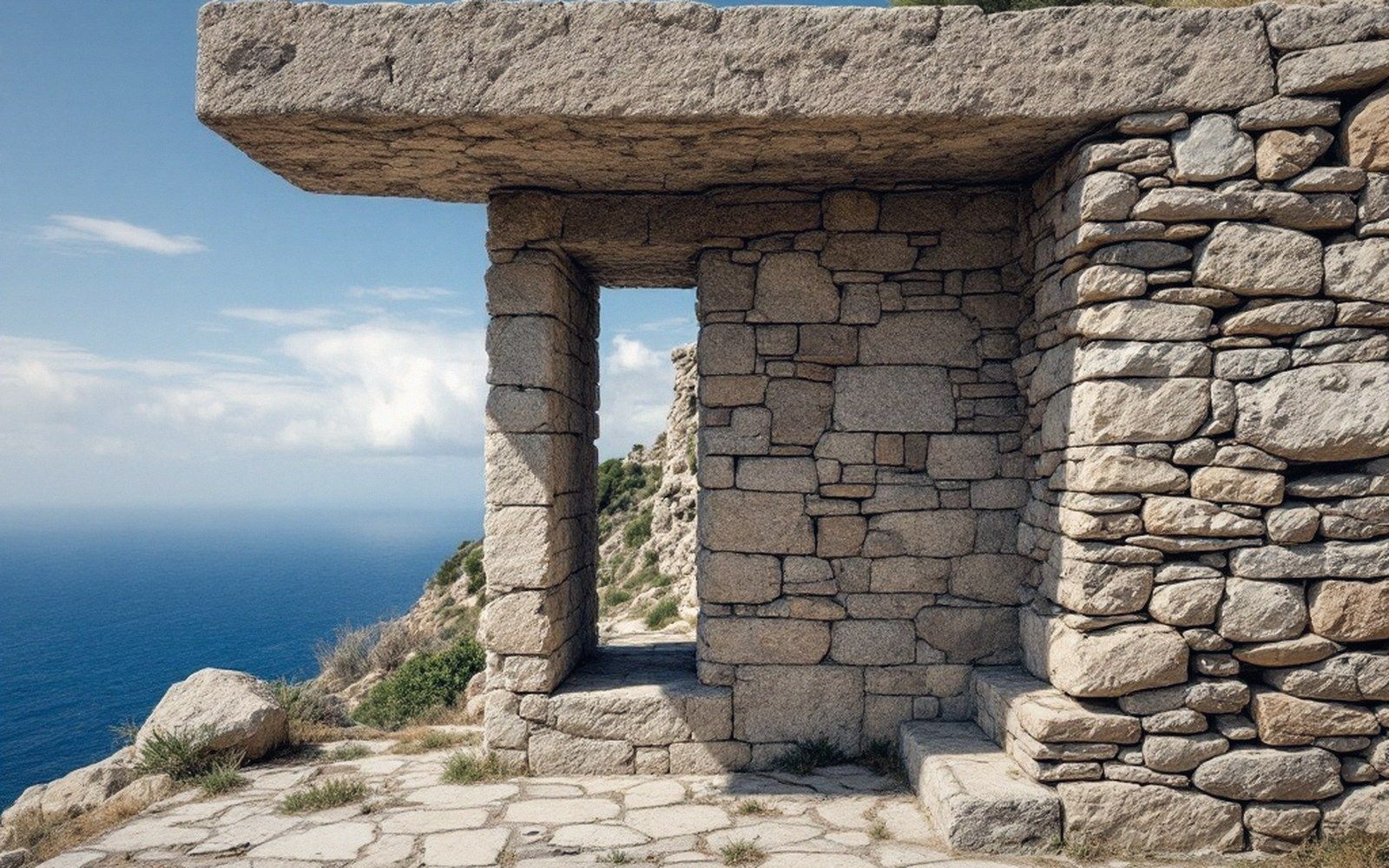
In Corsican vernacular building, lintels are almost always monolithic: one unjointed stone, running from one jamb to the other with a bearing of perhaps twenty centimetres on each side. That bearing matters. Too short, and the stone rocks under load or splits at the corner; too long, and the wall has to be interrupted to accommodate it. The geometry is tight, and the mason knew it without calculation.
Granite is strong in compression but relatively weak in tension, and a lintel works in bending — the midspan is always trying to sag. A short, thick stone resists this comfortably; a long, thin one does not. This is why windows in the granite interior tend to be narrow: not from any aesthetic choice, but from the physics of the material. The wider the opening, the deeper the lintel has to be to carry the wall above without cracking. A stone deep enough to span a generous opening becomes very heavy, and the problem shifts from structural to logistical. Two men and a pair of levers have limits.
Where the opening had to be wider — a doorway, a byre entrance — the lintel stone is correspondingly massive, and you can often read the effort of its placement in the wall around it. Jamb stones are sometimes oversized, set to take the extra bearing. Occasionally a relieving arch of rough voussoirs sits above the lintel, not to span the opening but to divert the wall-load to the sides, taking the bending stress off the flat stone below. This is economy of means: the arch does not have to be fine, only functional.
The lintel's face is usually left rough, split rather than sawn, with tool marks along its bed. On a village house of any ambition, the soffit — the underside — might be dressed flat with a punch, and the outer corners chamfered to a slight bevel. That bevel is almost the only ornament most of these buildings carry, and it is structural logic as much as gesture: a sharp arris chips; a chamfer holds.
Read the lintel and you read the quarry it came from, the opening it permitted, and the reach of the men who placed it.