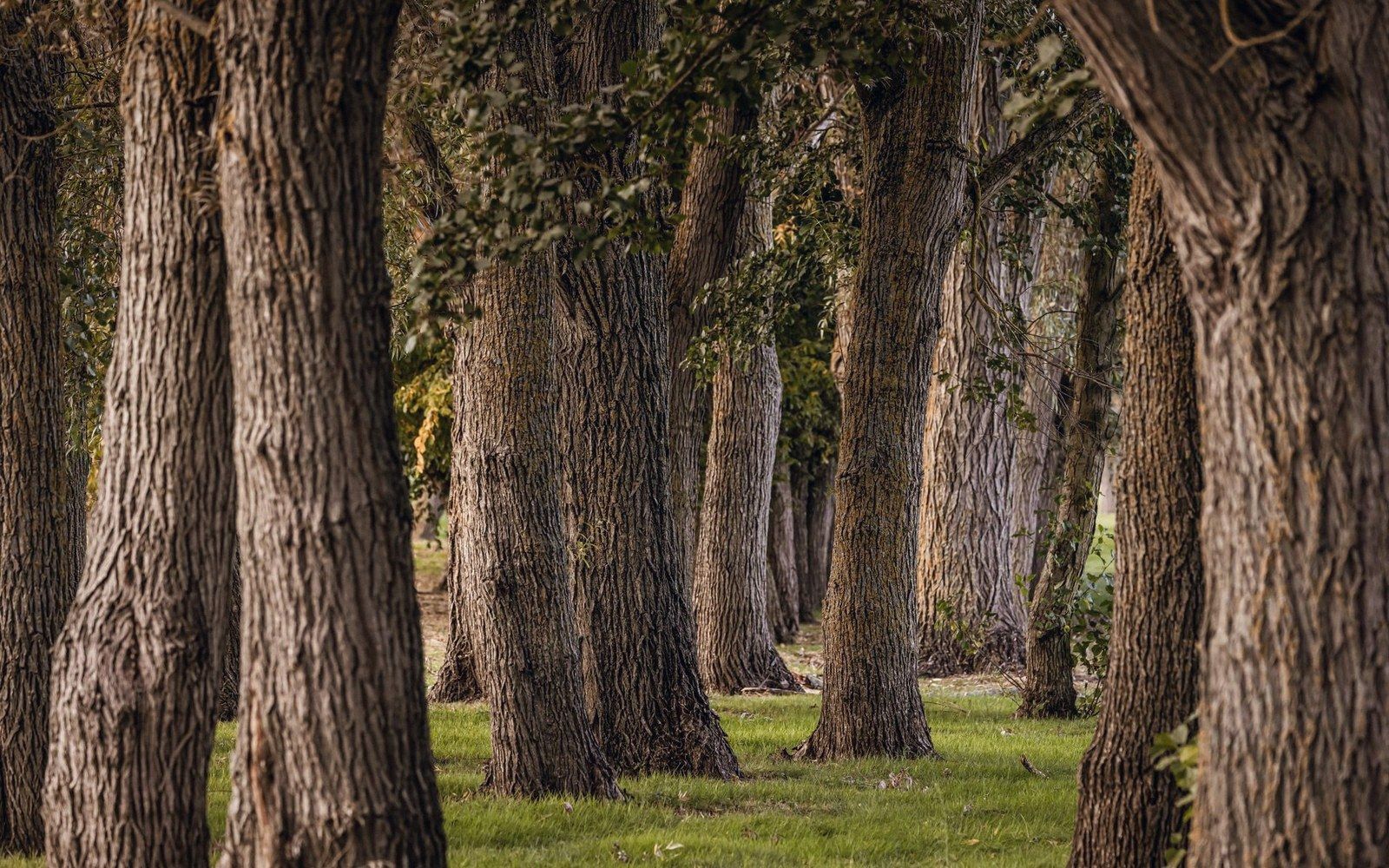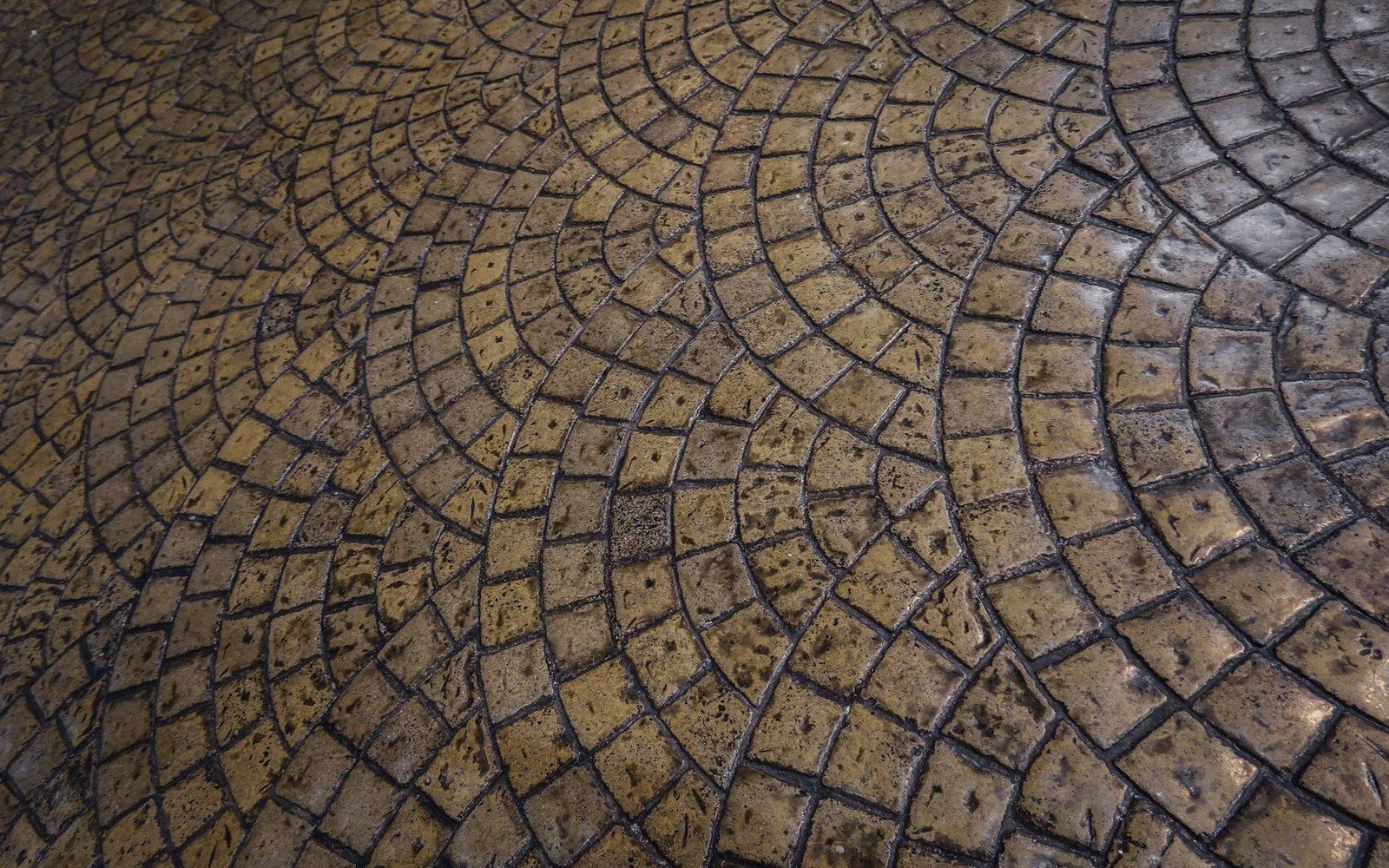
A flat stone floor built on an exposed spur, sited for weather rather than convenience, and built to last because the harvest depended on it.
What It Is and Where It Stands
The Corsican threshing floor — the era in Corsican, cognate with the Italian aia — is not a building but a piece of ground made permanent. A circle of flat stones, carefully laid, typically eight to fifteen metres across, on the highest or most exposed point the village could reach without losing too much distance from the fields. What it shares with a tower or a chapel is intention: someone decided this exact spot, and made it last.
The siting logic is unambiguous. Threshing separates grain from straw by beating or trampling, but winnowing — the step that follows, tossing the bruised mass so the lighter chaff blows away and the heavier grain falls back — requires a reliable, preferably constant wind. A sheltered hollow that would have suited a house or a fold will kill winnowing dead. So the floor goes to the spur, the ridge-end, the shoulder of hill that catches whatever the afternoon is offering. Winnowing needs wind, so the floor is sited for weather rather than convenience.
How It Was Built
The construction is simple without being careless. The ground is levelled first — sometimes by cutting into a slope, sometimes by building up the downhill edge with a low retaining wall. Then the floor itself: flat stones, chosen for smoothness and proximity, fitted close enough that a wooden flail or an animal's hoof finds no gap to catch in. The edge is often defined by a curb of slightly larger stones set on end, which keeps the grain mass from spreading and rolling off. There is no mortar in the floor; the stones are simply laid tight and true on compacted earth, and the weight of use keeps them in place.
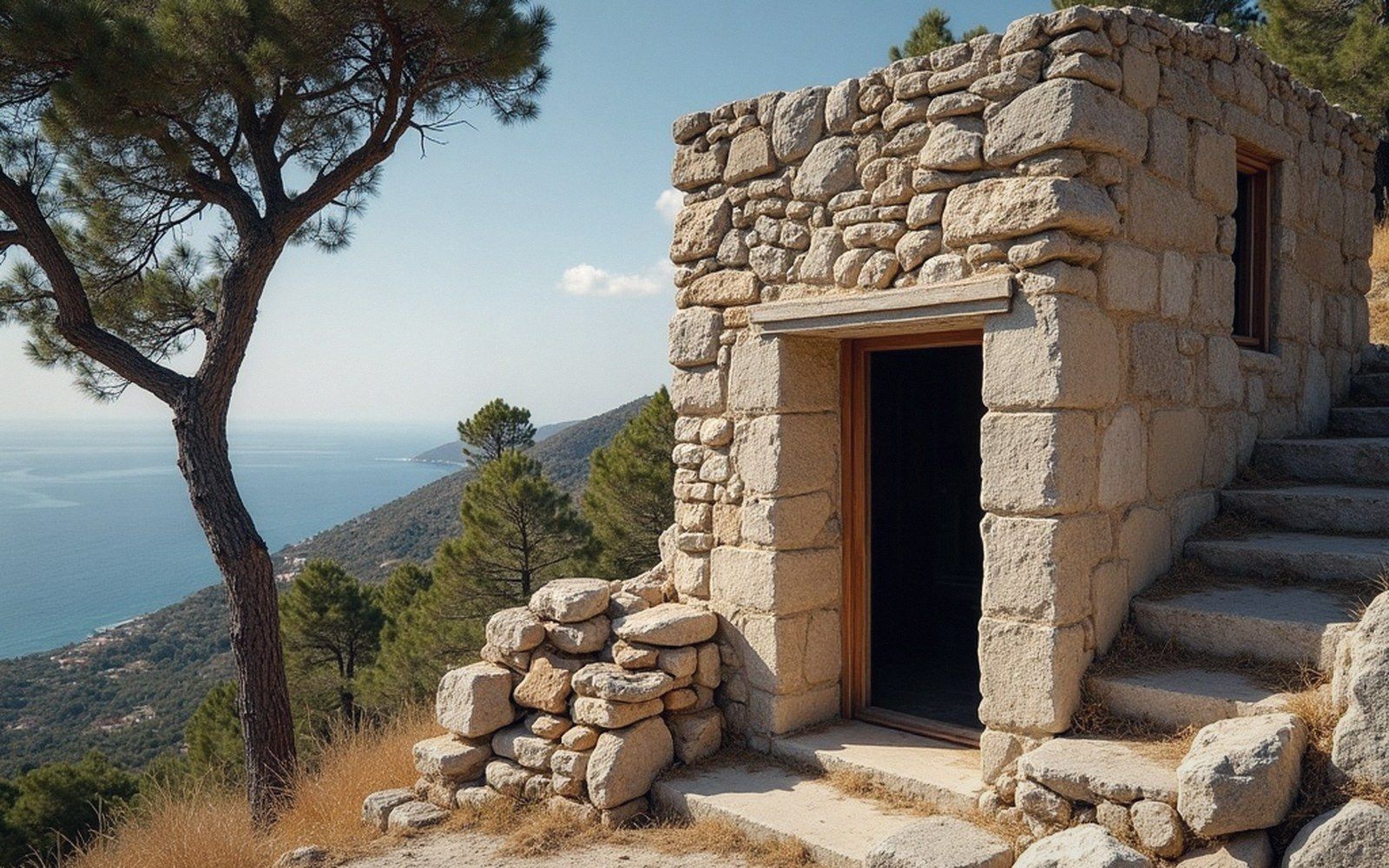
Granite is the material everywhere in the interior. Where the spur itself is a granite outcrop, the builders sometimes worked the living rock directly, filling gaps between natural slabs with cut stone rather than preparing a wholly artificial bed. This is practical intelligence: an outcrop is already level enough, already drained, already in the right place for wind. The same splitting techniques used for building stone — the wedge-slot method readable on outcrops across the island — would have served to trim an uneven surface into something workable.
The floor's diameter is not arbitrary. A circle suits the rotary movement of threshing: an animal treading grain in circuits, or a group of workers spreading their strokes evenly. Rectangular floors exist but are less common in Corsica's upland villages. The circle closes back on itself, and nothing escapes the centre.
The Floor in the Agricultural Year
The era was communal property in most villages, or at least communal in use. The harvest determined the order of access — whose grain was ripest, whose need was most pressing — and the floor was in near-continuous use through the dry weeks of late summer, when the wind was also most reliable. In the chestnut country, the same logic applied to the dried chestnut crop, though the chestnut's path to flour went through the u seccatoghju, the drying house, before milling, rather than through beating and winnowing. The era was primarily a cereal floor, serving the wheat and barley that the lower-altitude terraces could produce.
What the floor reveals about a village's organisation is as legible as its houses. A well-made, well-maintained era indicates a community producing a surplus worth the labour of permanent infrastructure. A floor in poor condition, or none at all, tells a different story: exhausted soil, emigration, a shift to subsistence on chestnut alone. The paved circle is an index of agricultural ambition, sited on the best wind the land offered, and readable as such from a long way off.
Signal and Stone is an independent publication about vernacular building and landscape in Corsica. It is not a tourism body and carries no affiliation with any visitor authority.