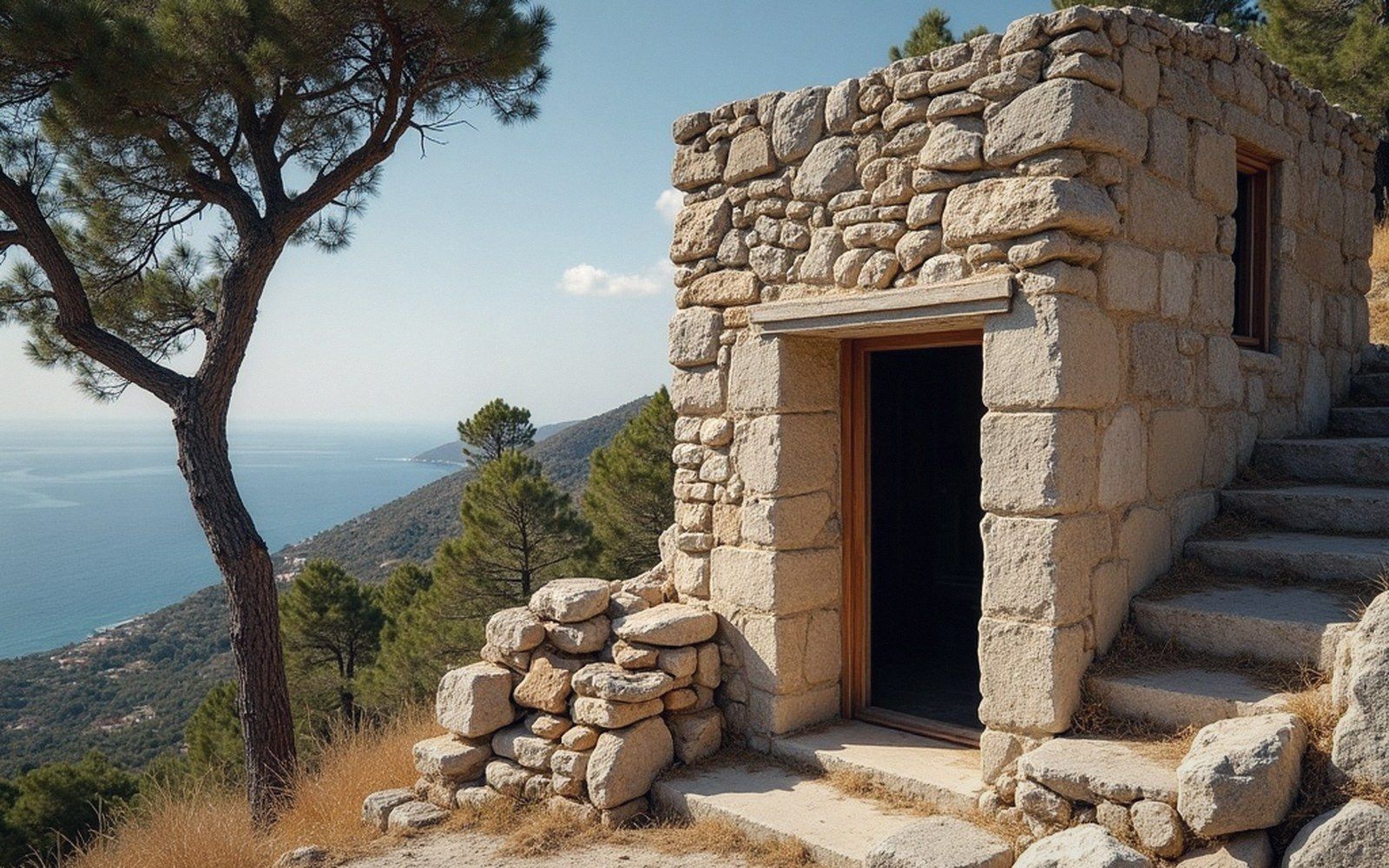
A small stone building with a slatted upper floor and a slow fire beneath it — the piece of infrastructure that turned raw chestnuts into something a village could eat through winter.
The Work the Building Does
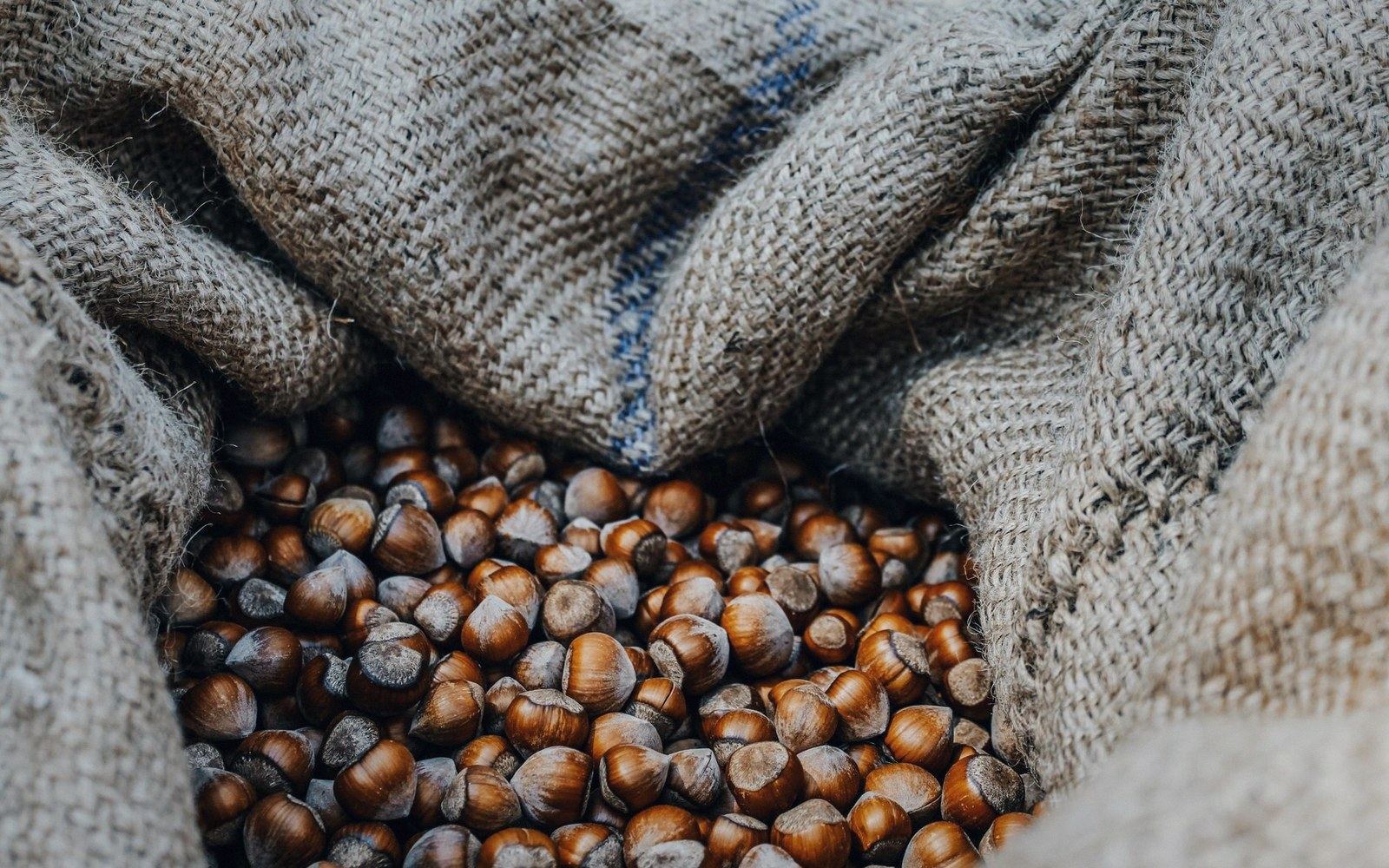
The chestnut, freshly fallen, is almost useless. Its water content is too high to store and too high to mill. Before it becomes flour — before it becomes the staple that fed the Corsican interior for centuries — it has to be dried, slowly and evenly, over several weeks. The building that does this work is the séchoir (drying house), and its design is a direct answer to the problem of controlled heat without fire damage.
The structure is small, typically one room on plan. The ground floor holds a hearth, banked rather than blazing; the fuel is chestnut wood itself, chosen for burning long and cool rather than hot. Above the hearth, a slatted floor of green wood — châtaignier planks spaced a finger's width apart — carries the chestnuts in a shallow layer. The smoke rises through the gaps, drying the nuts from below while the slatted floor lets the heat circulate without concentrating it on any single point.
The walls are granite, dry-laid or lightly mortared depending on what the immediate quarry offered, thick enough to hold warmth and buffer the outside temperature. There is usually a single small opening on each wall, low enough to admit air to the fire, high enough to let smoke find its way out without drawing so hard that the temperature spikes. It is not a chimney building; it is a slow-oven building. The distinction matters.
Tending the fire was a daily task across the drying season — six weeks, sometimes eight. The chestnuts were turned by hand to expose fresh surfaces to the heat. When the kernel rattled dry in its skin, it was ready for the mill.
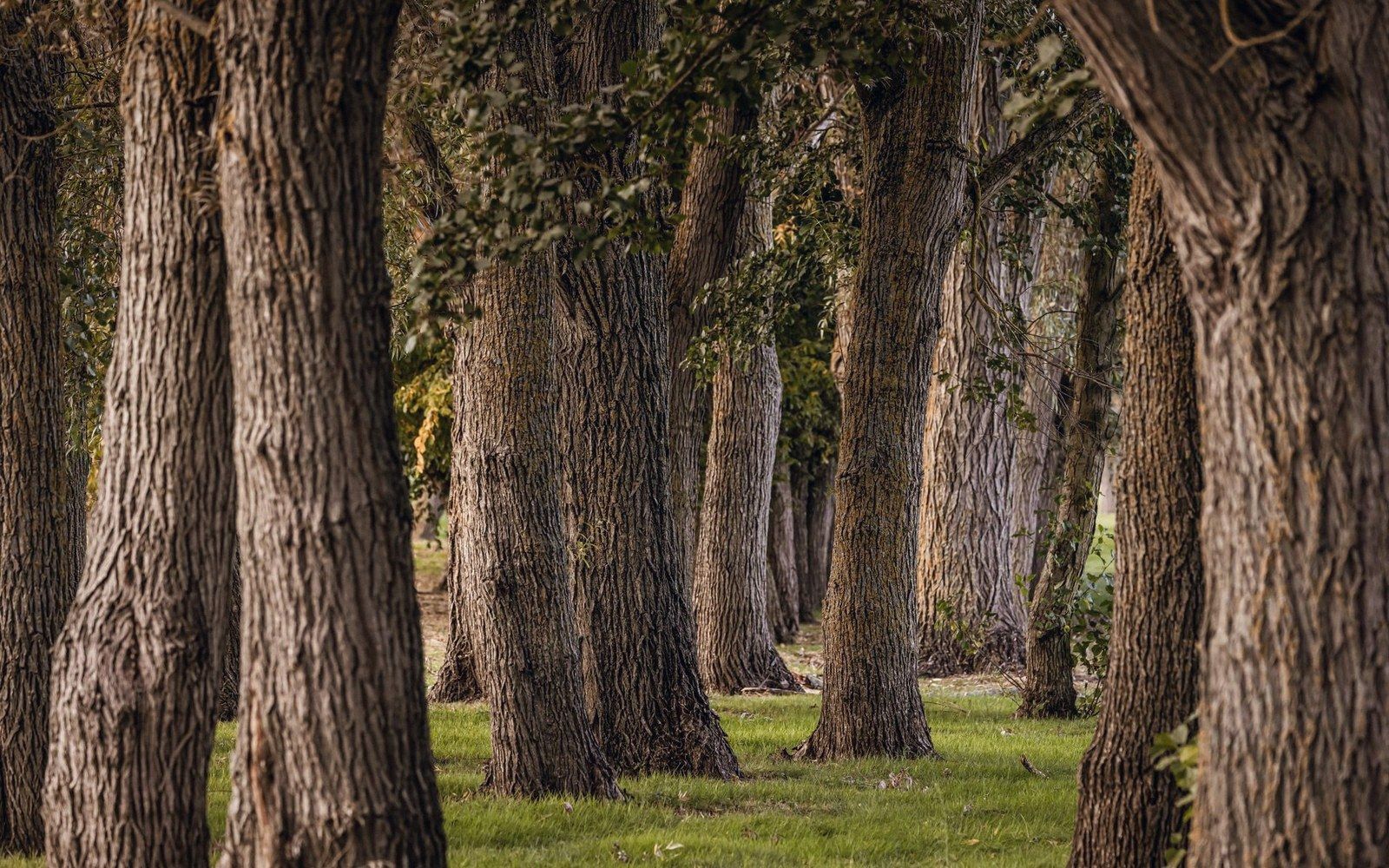
The séchoir almost always sits close to the chestnut grove it served, which is why these buildings appear not in village centres but at the grove's edge, in the trees: a stone box half-hidden by the canopy, its function legible only once you understand chestnut as grain.