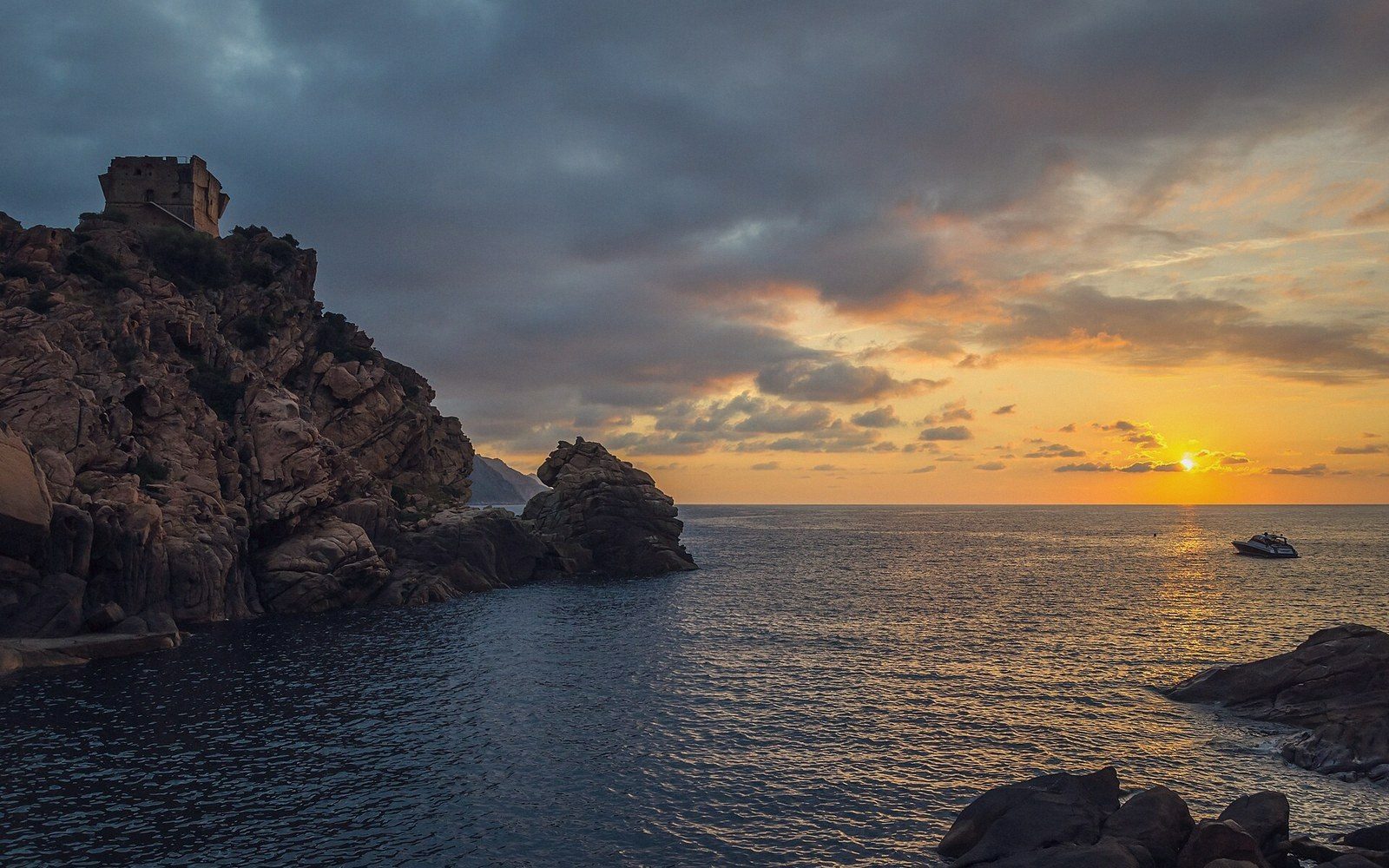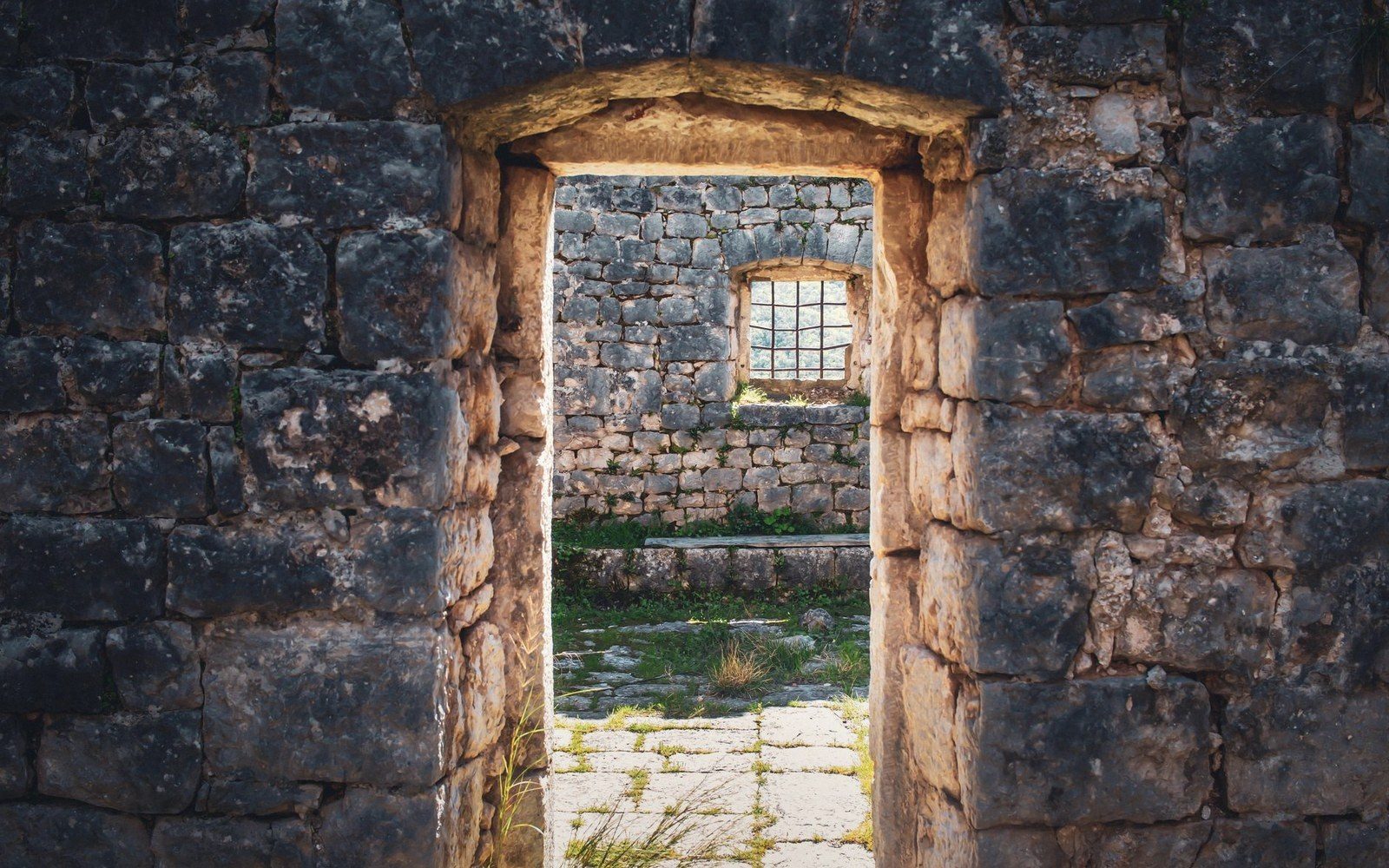
A single opening, set high in the wall, unreachable from the ground without the ladder that was never left behind.
A gap you could not reach
Every Genoese watchtower on the Corsican coast shares the same peculiarity: its door is not at ground level. The opening sits several metres up the wall — high enough that a man standing below cannot reach the sill. Access required a wooden ladder, portable and light, which the garrison hauled up behind them once inside. Remove the ladder and the tower sealed itself. No lock, no bar, no gate needed.
This is not an accident of style. The shape of a tower is determined at every point by the same logic — how to make a small structure defensible with a skeleton crew. A door at ground level is a weakness: it can be forced, undermined, or used as a charge-point for fire. A door four or five metres up the battered face of a granite cylinder presents none of those problems. A raiding party without a ladder of their own is simply unable to enter.
The opening itself is minimal — a narrow rectangle, just wide enough for a man in profile. A single stone lintel spans it; the jambs are the tower's own granite, dressed only enough to seat the frame. Nothing is ornamental. The raised sill often shows a slight forward lean or corbelling beneath it, so a man stepping out has a narrow ledge to stand on before descending. In some towers a pair of iron pintles — hinge-pins — survive at the jamb, evidence that a small shutter or half-door once closed the gap from inside.
The height varies by tower. Some openings sit three metres above the berm; others are closer to five. What never varies is the principle: the ladder was the lock. What a garrison was — two or three men, rotated on a supply schedule that was irregular at best — meant that a purely passive defence was the rational one. Haul up the ladder, wait, watch. The height of that door is a direct expression of the garrison's smallness.