Where the water made the work possible
Chestnut flour was not ground at home. The kernel — dried slowly over a fire in the granitola or séchoir (the two-floored drying house built in every chestnut-producing village) — emerged hard enough to crack a tooth. It needed millstones, and millstones needed water moving fast enough to turn them.
That requirement fixed the mill's position in the landscape before a single stone was laid. A site wanted a stream with reliable late-autumn flow, because the harvest came in October and November and milling followed immediately after drying. It wanted a drop in the watercourse — enough vertical fall to give the leat, the cut channel that delivered water to the wheel, genuine velocity. In the granite interior of Corsica, where streams run steep off the central massif and cut through boulder-choked ravines, those conditions recur at intervals that roughly match the spacing of village territories. The mill sat at the edge of that territory, on the boundary water rather than inside the settlement.
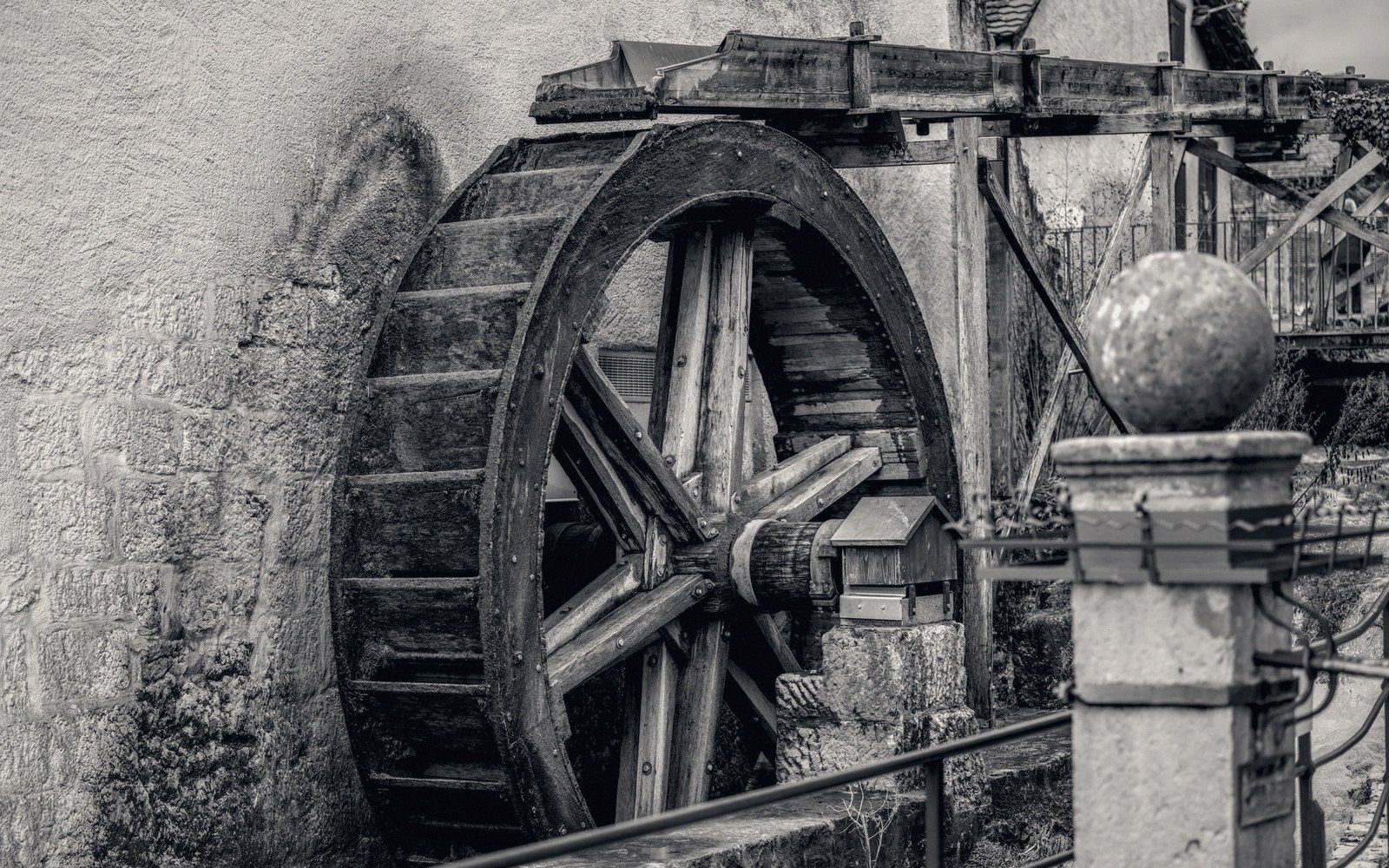
The leat itself was the real engineering. Cut or built along a contour above the stream, it ran level for as long as needed to accumulate head, then dropped sharply onto the wheel. In the rougher versions — and most were rough — it was nothing more than a shallow channel faced with flat stones and pointed with local lime where the water pressure demanded it, left open to the sky and cleaned of leaf-fall each season before use. The wheel it served was typically horizontal, a simple paddle wheel set in the streambed directly below the millhouse floor rather than the vertical overshot wheel of lowland mill tradition. This arrangement, found across the mountain Mediterranean, needed less infrastructure: the wheel shaft rose straight up through the floor to drive the upper stone directly, with no gearing between.
The millhouse itself followed the same vernacular logic as every other building in the village cluster: granite walls, a single interior, a low lintel, a stone-flagged floor with a central pit for the wheel shaft housing. The stones rested on a wooden bed-piece that could be shimmed to adjust the gap between runner and bed-stone — closer for fine flour, wider for a coarser grind used in polenta-style preparations. The whole mechanism was communal property, and the village entrusted it to a particular family who maintained it in exchange for a portion of every grinding.
Milling was seasonal work compressed into a short window. Once the drying house had done its work, the community moved quickly: wet winters swelled the streams but also threatened to flood the leat, and a harvest spoiled by delay could not be replaced.