The platform above the tower chamber — not a lookout in any romantic sense, but a working surface that kept the garrison functional.
What the Top Was For
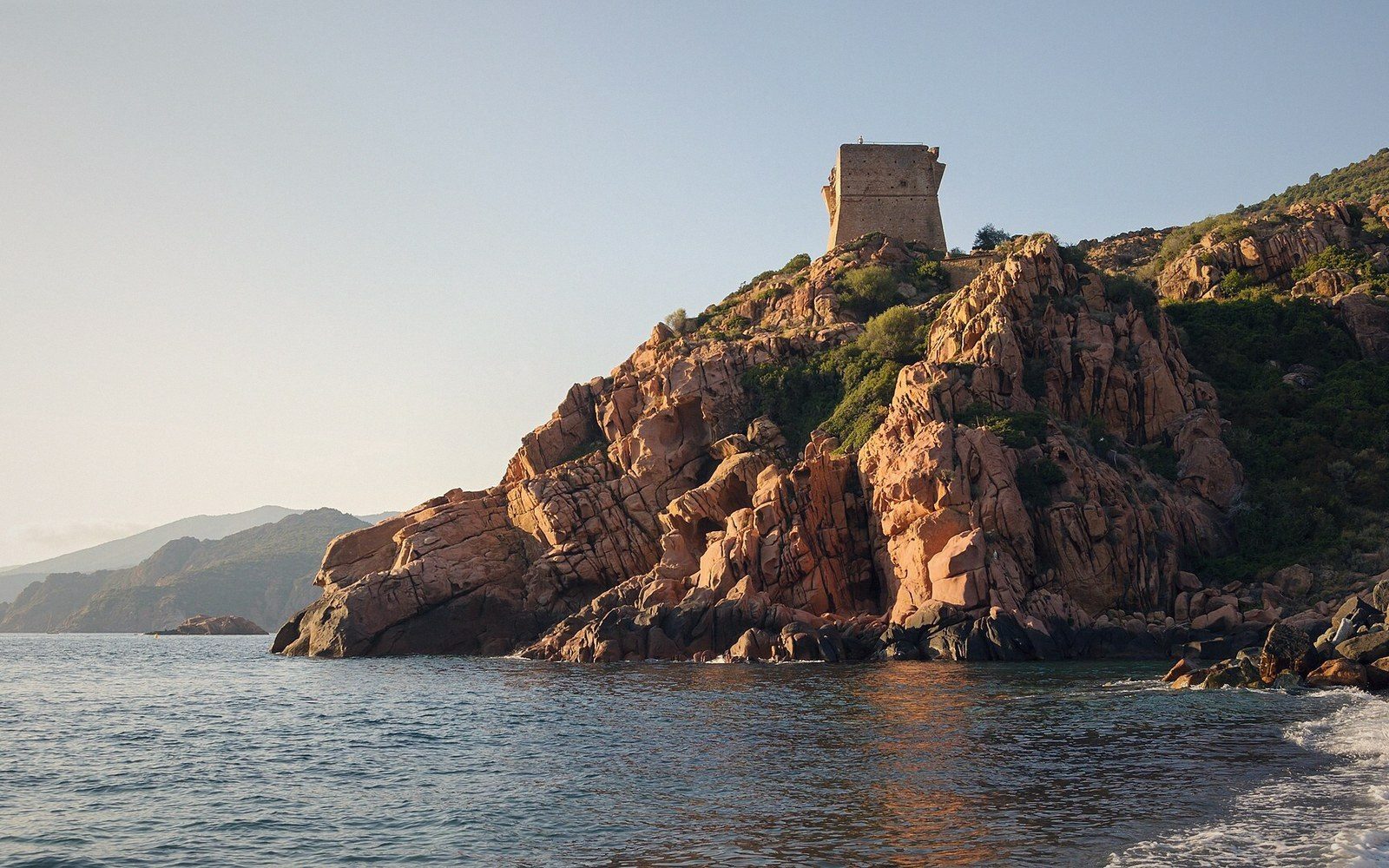
The terrace of a Genoese watchtower is rarely read for what it actually was: a tight, hard-won platform on which two or three men spent the majority of their daylight hours. The chamber below was for sleeping, for storage, and for shelter in extreme weather. The terrace was where the work happened — and "work," in the context of a coastal tower, meant watching.
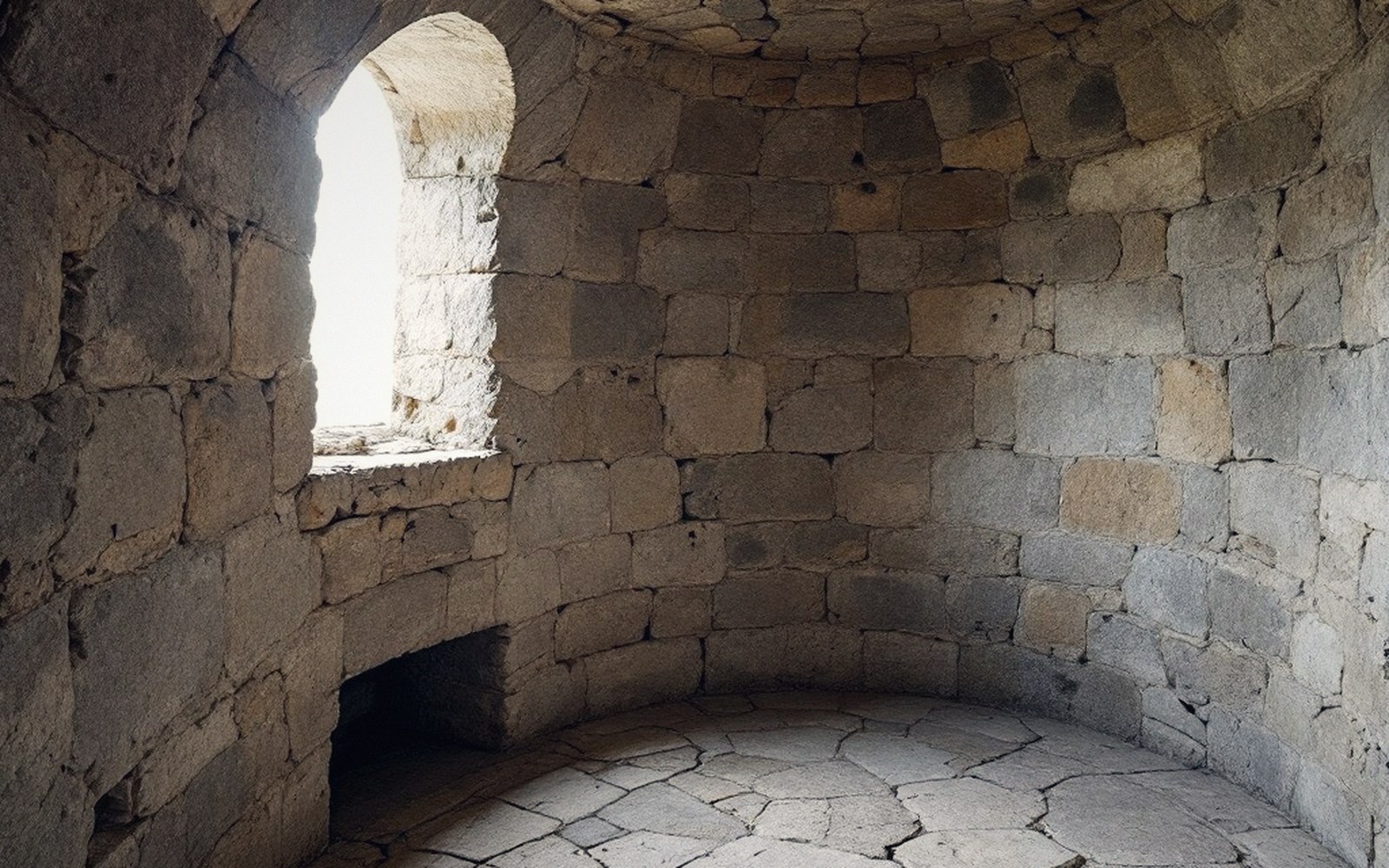
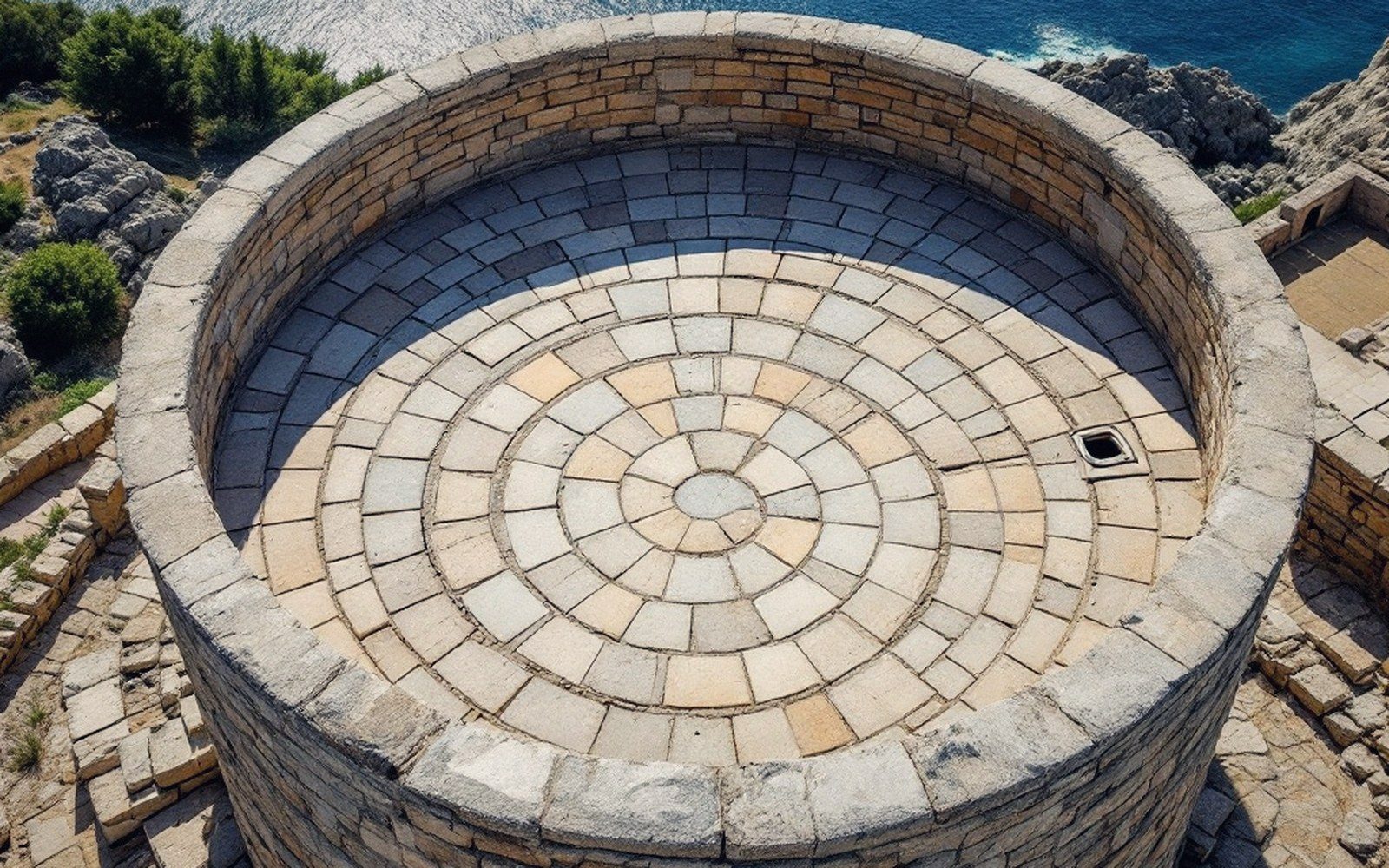
The surface itself was built to drain. Across most surviving towers, the terrace floor is slightly cambered — a shallow dome of mortared rubble set within a low parapet — so that rain sheds to the outer edge rather than pooling and working down through the vault below. That vault, usually a simple barrel or coned form, bore the load of the surface above it and gave the garrison a dry ceiling. Compromise the drainage and you compromised the chamber; the two were structurally one decision.
The parapet, rarely more than chest height and often less, served a double function. It gave a man something to brace against when scanning the sea in wind, and it gave the signal fire a windbreak when one was needed. The fire — wood or damp material chosen for its smoke by day, pure flame by night — was the whole point of the apparatus. Each lit signal could be read along the chain to the next tower and the next, so the terrace had to accommodate whatever fuel was being kept dry and ready. There is evidence at several towers that a small stone box or recess near the parapet served precisely this purpose: a sheltered fuel store within arm's reach of where the fire would be set.
Beyond the signal apparatus, the terrace carried whatever a garrison improvised. A wooden hatch covered the stairwell opening. Rope, a water vessel, possibly a small iron basket for the fire — the inventory was spare. Nothing structural survived because nothing structural was built in permanent material up there, beyond the parapet itself and the floor underfoot.
What the terrace was not was a fighting platform in any serious sense. The towers were not forts. A garrison of two or three men was neither equipped nor expected to hold ground; their function was observation and relay, not resistance. The parapet exists to keep men from falling and to break the wind around a signal fire, not to shelter an archer. Reading the top of a tower as a battlement misunderstands the entire system.
The platform is evidence of a communication infrastructure, not a military one — and its modest, practical construction says so.