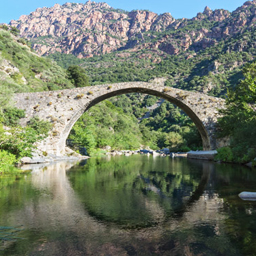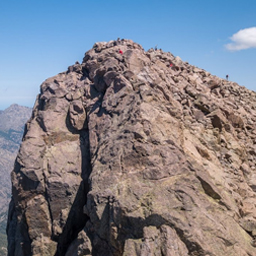
Fire extinguishes life.
This poster was designed by class CE2 of Calenzana Primary School.
Forest and maquis fires are a great danger in Corsica, as I can testify personally. Please follow the rules and advice offered. Do not light fires anywhere between the end of June and September, do not leave rubbish in the countryside and do not throw cigarette butts from car windows or in nature. Remember the telephone number for the fire service and don't hesitate to call them: 18.
The forest fire problem is far from under control in Corsica, but one enterprising commune has come up with an original surveillance system. Cervione has placed a camera on the church bell tower to swivel through 360° and transmit images every ten seconds via internet to be read by the fire authorities.
There is a huge amount of information packed in here, but if you can't find what you're looking for then Google it!

It is not surprising that Corsica has a high concentration (76) of France's sites listed under the Natura 2000 programme. The regional natural park covers a third of the island's surface and includes 82 communes - it runs NW to SW more or less coast to coast and including the highest mountain range. There are also many coastal areas which are specially protected. The 17 special protection zones include mountain and coastal areas, many of which are also places of strong tourist appeal: forests, high valleys, lakes, bays and islands.
The management of water is hugely significant in Corsica and finally the regional government (CTC) is taking the precious resource seriously. Being a mountainous region, Corsica is inherently rich in water, but much has been poorly managed in the past. There is now, however, even talk of exporting wtare to less favoured islands in the Mediterranean. Learn more at the Comité de bassin de Corse.
The Mountains: Corsica is mountainous and its highest point is Monte Cintu at 2710 metres. It has twenty other mountains of over two thousand metres and the average altitude is 560m. Corsica has the highest mountains and the most rivers of any Mediterranean island. The mountains run roughly north west to south east and cut the island in two. The east was traditionally known as 'over here' (en deçà des monts, or in Corsican, da monte in qua) or the 'land of the commons' and the west as 'over there' (au delà des monts, or in Corsican, da monte indà) or 'the land of the lords'. There was indeed, no carriage road between the two main towns of Bastia in the north and Ajaccio in the south before the C19. A recent anthropological study shows a certain genetic differentiation between north and south, which follows the linguistic subdivision differentiation. This is quite apart from the differentiation from the populations of France and Tuscany, which have had such political and cultural influences on Corsica (G Vona et al, in the American Journal of Human Biology, 2003).
It is no wonder that the island is often known as the Mountain in the Sea. All the main mountain massifs are within the Regional Park (Parc Naturel Régional de la Corse - www.parc-naturel-corse.com). The four highest massifs are: Cinto - very uneven and broken, granitic (largely volcanic rhyolites) with the highest mountain of Corsica Monte Cinto at 2 710m, as well as several above 2 500m; Retondo - granite and also uneven, with several glacial lakes and Monte Retondo itself is 2 625m; Renoso - less dramatic, mainly granitic and Monte Renoso is 2 357m; Incudine-Bavella, mostly granite also, but with limestone surfacing in some parts, some of the relief is soft and sometimes very jagged like the amazing Aiguilles (Needles) de Bavella and its highest peak is the Incudine at 2 136m.
The Office National des Forêts offers guided walks of between two and a half and three hours in the Forests of Aitone and Bonifatu (in the north) and Chiavari and Bavella (in the south) every Thursday in July & August at 7 euros per person (info from 04 95 23 78 21) and the ONF and the Chemins de Fer Corses offer a combined train and walk in the Forest of Vizzavona (info from stations). While the ONF continues to be the biggest forest operator, the actual ownership of the state forests has been transferred to the CTC (regional government). One of the biggest assets is the Lariccio Pine that covers 45 thousand hectares (between 1000 and 1500 metres). This species is particularly resistent and has been extensive used as the basis for re-aforestation especially in Great Britain and Italy. The importance of this resource has led to the EU declaring it as 'priority' in its Habitat Directive and is supported by the 'Life' programme a so-called keystone species.
matre natura - mother nature
The GR20 is one of the better known Grandes Randonnées of France, but Corsica is covered with ancient footpaths and bridleways, many of them quite as stupendous as the GR20. The GR20 generally takes 15 days from Calenzana (near Calvi) to Conca (20 or so kms from Porto Vecchio). Only four roads cross this stupendous high mountain path in its entire length. There are a slowly increasing number of refuges on the way and at Vizzavona there is hotel accomodation. There are several other long distance paths and new ones are being opened up; the first 40 kms of one crossing from Solenzara to Ghisoni will be open in 2003 - it will ultimate be 80 kms in length.
The island's roads were opened to wheeled vehicles only in the late nineteenth century, with a very few exceptions, and even today the country has more unmetalled than tramac roads. Many of the tracks were of course for regular communication, but some of the most amazing ones that reach the high slopes are the ancient transhumance tracks used virtually no more by the shepherds - there is a shepherd in Belgodere, who still does the transhumance done by generations before him, but he transports his sheep by truck. If you want to know more about the subject go to www.amuntagnera.com, the association that promotes this dying practice.
The main mountain watershed range is largely granitic. There are also a wide range of semi-precious stones to be found. People who know what they are doing can collect magnificent crystals - especially near Porto on the west coast. You will see a lot of strange shapes in the rock and many holes, called tafoni. There has also been widespread glaciation followed by erosion, particularly in the north. Cap Corse and the Castagniccia, on the other hand, is largely of folded schists, hence the typical roofing material of stone slates. Now these lauzes are the subject of grants for the repair of traditional roofs.
You will find rich vegetation on all but the highest slopes. Some of the most common bushes are the arbutus (l'albitru), juniper (u ghjineparu), heather (a scopa), and myrtle (a morta); and trees: the sweet chestnut (u castagnu) and the Laricio pine (u laricciu).
Given the mountainous nature of the island, cultivation on terraces was widely practiced. Sadly this great carving of the hillsides is falling into disuse. Traditionally people would leave their village in the day to work on the terraces and managed to grow enormous amounts of produce as well as working continuously with stone. Every fertile spot was thus useful and their ruin threaten memories of this part of Corsica's cultural heritage. With EU support (Proterra programme), the Corsican Office of the Environment started in 1999 the creation of demonstration sites for the rehabilitation of terracing. You can visit one in the Balagne village of Belgodere.
Some of the earliest mountaineering records of Corsica are in English. The second recorded ascent of Monte Cinto was by the English alpinist Tuckett, accompanied by the mountaineer-painter Tuckett, accompanied by a French guide F Devouassoud. That is not to say, however, that Corsican shepherds had not been running up and down its slopes since time was. Apparently George Finch, his brother Maxwell and the Norwegian Bryn made the first alpine ascent of the Paglia Orba by the east face in April 1909 in almost winter conditions.
Corsica has some very impressive alpine volcanic lakes. There is an excellent guide, Lacs de la Montagne Corse, though of course you can find details in many other general and mountain guides.
The Comité Regional de Randonnée Montagne et Escalade, the mountain walking & climbing committee is at Parc Fiorella, Bt B, Résidence Santa Lina, 20000 Ajaccio (tel 04 95 52 00 56).
Corsica's mountains are not just the peaks, but have many historical sites and scores more as yet uncharted. An example is the Niolo, a high mountain plateau region that has dozens of sites of interest from the neolithic & megalithic ages, the iron age, right down through medieval times and naturally later.
Each year there is a Mountain Festival at Bocagnano at the end of September. There's workshops, walks, climbing, cinema and other attractions (details from the Association U Liamu Gravunincu on 04 95 53 72 00).
Other pages: Home Page | FAQs | Corsican Websites | Corsican Music | Travel to Corsica | Public Life in Corsica | Corsican Tastes & Scents | Corsican Language | Mystique of Corsica | Corsica's Climate & Weather | Business in Corsica | British & American Connections with Corsica | Newsletters | Contact

If you would like to see back issues of the newsletter, click here.
This page: Introduction | Diving | Extreme Sports | Flora & Fauna | Mountain Walking | Rock Climbing | GR20 | Sailing | Skiing | River and Lake Fishing | Horse Riding | Beaches
The Coast: The coastline of Corsica is 1000 kilometres long (20% of France's coast) and has amazing cliffs, long sandy beaches and many hidden coves. It is almost certainly the least 'spoiled' coastline of France.
There's wonderful walking on coastal paths as well as in the mountains and often in the winter, it may be more advisable to tackle them than risking the heights. One of the finest is round the top of Cap Corse. You can set off from Macinaggio on the east coast and head for the charming small port of Barcaggio (try the Hotel la Giraglia - I've not stayed there). There's lots to see en route, not least four Genoese towers and great views of Elba.
Santa Maria di a Chiappella, an 11C chapel overlooking the nature reserve island of Finocciarola on the bleak and bare coast north of Macinaggio. The twin apses date from the time of an ancient family feud and a refusal to worship at the same altar. You can visit (the outside at least) if you walk the Sentier des Douaniers in Cap Corse. Or you can order an excellent guide book to the coast path.
The French Coast Law (loi littoral) has come too late to save the Riviera, but is stoutly defended in Corsica, though there have been some infringements. The law is designed to permit free access to the sea for all. The coast is defined by all land that is touched by the sea, including in storms. Free access over land should be available within 500 metres of any point and there should be free longditudinal access by foot round the entire coast. The law also protects 'sensitive areas' such as dunes, lagoons, wetlands, woody coastal zones or those which are habitats of protected species. It also has an objective of organised urbanisation, such that the principles of the law are respected. There are sadly some exception, largely for properties constructed before the law came into force; an example is a striking English villa near St Florent, built by Lord Chilcot in the thirties, with its own port and jetty.
There is strong resistance to the concreting of Corsica, or the 'Balearication' of the island. The biggest threats are in the south, including the whole of the Sartène coast, the Montlaur citadel of Bonifacio (presently owned by the Ministry of Defence), the spectacular beach of Palombaggia near Porto Vecchio, Cavallo island (that has long involved a sordid property affair) and Sperone (where there's already a golf resort). The Lavezzi islands off Bonifacio have been threatened, but the Office of the Enviornment which manages the site has set up a limited number (80) of fixed moorings where boats may only stay 24 hours and aqualung diving is banned almost entirely and divers must sign a charter of 'good behaviour' to get permission to dive.
A growing proportion of the coast is being aquired by the Conservatoire du Littoral (21% of the total length belongs to it so far and approval has been given for the acquisition of a further 11%). In fact a quarter of this national organisation's hectarage is in Corsica (56 sites covering 14 700 hectares). Regional policy aims at it owning 50% of the island's 1000 kms. There are still 600-700 kms that are entirely 'virgin' and that's where the challenge lies.
For example the Revellata peninsula just south of Calvi is one such purchase by the Conservatoire. It was threatened with housing development, which risked the delicate ecosystem and the important archaeological sites, as well as free access and the wildness of the place. Others include most of the lagoon of Biguglia, 15 of the Genoese towers of the 60 or so in ruins, as well as several megalithic sites (you can download a map of where they are by clicking here). The Département of Haute Corse made a proposal to sell off six towers it owns. It looks as though the resistance it encountered will result in them not disappearing into private hands. For more details, see the Conservatoire's site - www.conservatoire-du-littoral.com.
The Conservatoire has recently aquired important coastal sites, such as Crovani Bay south of Calvi (where there are disused silver mines and other important relics), the valley of the Fango river (already a UNESCO site and part of the Parc Naturel), parts of the Gulf of Porto, round the Lagoon of Biguglia and the valley of Campoloro on the east coast. In the latter three areas, there are plans for more aquisitions. In Haute Corse, an Atlas du littoral de Haute Corse has been published to give a status report on the implementation of the Loi Littoral. There are two big aquisitions on the slate: 1 350 hectares at Capo di Feno near Ajaccio and 945 hectares at Girolata.
As on land, there are a growing number of reserves on the coast. Indeed all the waters of
Corsica are a protected area for dolphins and whales. The Bouches de Bonifacio are now a
controlled zone by the International Marine Park (Réserve Naturel des Bouches de Bonifacio - www.parcmarininternational.com). It is managed by the Corsican Environment Office (OEC) and stretches right over to the coast of Sardinia. It ptotects the water and the coast. Here's a live 'Eye of St Lucie':
'
The International Ligurian Sea Cetacean Sanctuary (Pelagos) was established in 1999 and covers 100 thousand square kilometres, amounting to 4% of the Mediterranean (as shown within the red lines below). Toulon is bidding to become the HQ town of Pelagos. It is a member of MEDPAN (Mediterranean Protected Areas Network).

The Gulf of Girolata is a nature reserve, not least to protect the native osprey. Sea horses and cowrie shells are protected species and fishing is forbidden in Corsica coastal waters since October 2002.
A new institute has just been established - L'Institut de la Mer et du Littoral de la Corse - to bring together many professionals (fishermen, vets, doctors, marine biologists, corallers), sports and cultural people, Government officials. The objective is reconcile environmental protection and economic development, since 80 per cent of the Corsican population lives and works on the coast, whereas 70 per cent of the coast line is excluded from potential development. All this in the interest of sustainable development. If you want to contact the president of the association, he is Dr André Rocchi (tel 04 95 56 20 36).
A new project - A casa di i pesci - has been established to create artificial reefs just off the coast by the Bigugia Lagoon on the east coast. The aim is to encourage the breeding of Mediterranean species of fish (for more information, contact STARESO)
Erosion, fossilised ear or sculpture?
It's a rock just outside Calvi.
Corsica's coast is ringed by still existing and destroyed Genoese towers - built from the C16 onwards, initially as defences and warning beacons against the Saracen invasions. Here is one under construction:

And here is the finished article. This one is at Campomoro in the SWand was built in 1583-86, one of Corsica's finest and surrounded by a star shaped outer wall, it was financed by the Office of St George by the raising of a supplementary salt tax.

The Campomoro tower was manned by a capo and five soldiers, wheras most Corsican towers, being smaller, were manned by only two or three, except when under threat. They were genrally built with water storgae below and living quarters above as this cut away drawing shows:

Nearly 90 towers were built in Corsica in the C16. Here's another that's sill standing. It's at Miomo, north of Bastia in the NE.

Most are round and are up to 18m in height, with a cistern in the lower part, a living section in the middle and an observation/fighting platform at the top. At ground level were water cisterns. The walls are generally 4m thick. They stand at sea level, up to 350m. If you'd like a free book about 12 of the towers in Haute Corse, the contact CAUE, 2bis Chemin de l'Annonciade, 20200 Bastia (tel 04 95 31 80 90). Ask for 'Batiments de Corse - III: Tours' - it's well illustrated and produced by historic monument architects. An excellent pair of books have been published: Sentiers de Corse - Tours Génoises (40 towers in the south) and tome 2 (48 towers in the north). They are designed for walkers, but are filled with historical, geographic, botanical information as well. It is published by Editions Albiana and the Parc Naturel. If you'd like to see some excellent pictures go to the fotocorsica site.
An excellent source of further information is an association called, I Torregiani, set up by a José Alessandri and friends. They have already visited 200 sites and are making a complete inventory, sometimes taking as many as 500 photos of a single tower. The mass of information they are gathering is the subject of their database and they are in the process of building a website - for the moment contact them by email or telephone - 04 95 70 95 39.
If you would like a map of all the Genosese Towers, click here. You will need the Acrobat Reader program
, which you can download also for free, if you don't have it.
A good book on the coast is Les Rivages de la Corse by Guy-Patrick Azèmar with photos by Christian Andreani, a well-known Corsican photographer and musician.
Other pages: Home Page | FAQs | Corsican Websites | Corsican Music | Travel to Corsica | Public Life in Corsica | Corsican Tastes & Scents | Corsican Language | Mystique of Corsica | Corsica's Climate & Weather | Business in Corsica | British & American Connections with Corsica | Newsletters | Contact
This page: Introduction | Diving | Extreme Sports | Flora & Fauna | Mountain Walking | Rock Climbing | GR20 | Sailing | Skiing | River and Lake Fishing | Horse Riding | Beaches
If you would like a helpful guidebook, then I would suggest Corsica Mountains
by Collomb,
Walks in Corsica (covers not only the GR20, but also
other walks); Landscapes of Corsica
by Rochford is another.
Trekking in Corsica by David Abram - the Rough Guide author - is an excellent
general guide; it serves as a guide to Corsica with a walker's emphasis and has detailled information and maps on many of the major walks.
Gillian Price's book, Walking in Corsica: Long-distance and Short Walks also gets
very high marks. Then there's Klaus
Wolfsperger's Corsica: The Finest Valley and Mountain Walks.
For the GR20, there's paddy Dillon's Corsican High Level Route: GR20
. For those who'd like to do a part of the GR20, then use the Lonely
Planet Corsica, since it has a concise 15pp guide to the walk.
There is another good book on the famous high mountain path, which appeared (in English) in 2001. Called The Great Hike - all stages of the GR20, it's by Bernard Biancarelli and translated by Jo Reeves. It is published by Albiana of Ajaccio and you should be able to get it in any bookshop in Corsica. If you can manage French, it's called Le Grand Chemin. This title is in a series (the others are in French only) called the Sentiers de Corse, with titles on the Restonica-Tavignanu valleys, a Summit guide (all 117 summits higher than 2000m), two volumes (Haute-Corse and Corse du Sud) providing tours with walks round all the Genoese towers on the coast, a guide to the walks of the Bavedda, the massif of Monte Ortu (above Vizzavona) and the southern massif of Monte Rinosu. One of the walking guides I like in French is Balades Nature en Corse, because not only does it have some good walks, but also one of the best available guides to Corsican wildlife. Another good guide in French is La Traversée de la Corse by Charles Pujos. Albiana with the Regional Natural Park have also recently published a carto-guide of 26 walks in the centre of Corsica and it's available in both French and English versions. This excellent illustrated walkers' guide-map is available from the Corte Municipal Tourist Office at €5 by email.
If you visit bookshops in Corsica, you'll find others and some will be specialised in the region where you are. Otherwise go to the local Tourist Information Office and they will almost certainly tell you what the best local guides are and will have some free ones too.
There are far too frequent accidents in the mountains of Corsica, hence The Ten Commandments of the PGHM (the mountain rescue gendarmes):
There are many well trodden mountain paths as well as endless old transhumance and mule tracks to explore in Corsica. Some are appropriate for the casual walker. Most guides will introduce some of them. Most frequently mentioned will be the high mountain routes - the GR20 (which goes NW/SE) and the transversal Mare e Monte and the Mare e Mare. The GR20 has an international reputation and no wonder, given its spectacular scenery and changing vegetation along its 175 kms. The 'standard' time to go from Calenzana to Conca is 14 days, but I have a serious walker friend who would not dream of doing it in half that time (at 64). The northern section to Vizzavona is considered the toughest and the southern part from Vizzavona, the greenest. You'll climb 10 000 metres (and descend as much!).
If you walk the GR20, you'll have been in company with 13 000 others who will have dnoe all (7 000) or part of the route in the season. About 63% of the walkers are French, 13% German, 8% Belgian and 5% British. The GR20 is the third most freqented 'big' path in France after the Compostella and Mont Blanc. There are refuges at about 6/7 hour walking intervals and at a few points there are hotels accessible (eg Vizzavona). The refuges accommodate only about a third of those who stop - the rest camp at them. Camping sauvage (ie away from the refuges) is forbidden, thankfully. In the middle of winter the route is very dangerous and most people do it from May-October, but that period is also, of course, the hottest (already by the end of July in 2001 it was 34° in the interior). It's not a walk to be undertaken lightly and without preparation.
About 2% of holiday makers in Corsica are walkers and number is growing - they spend about €12 million a year, by the way. Happily the public authorities are responding to demand and more and more paths are being re-opened as well as a growing numbers of refuges and gîtes d'étapes are being established. Walkers form a bigger proportion of tourists in the early and late parts of the season.
The Parc Naturel Régional de Corse has produced a very handy leaflet for walkers seeking lodging - in gîtes d'etape and refuges. You can ask for a copy by emailing them. They have some other useful publications and guides (eg on plants & flowers and fish). If you want to visit their site, it's at www.parc-naturel-corse.com. The Office National des Forêts (tel 04 95 23 78 20 & fax 04 95 20 81 15) have good walkers' leaflets on their forests. A not very extensive, but handy little site is www.corse-nature.fr.st that covers beaches, rivers and mountains.
The Parc Naturel Régional de Corse has started a series of projects to open up the interior & mountains, like the reopening of transhumance trails, old long distance tracks like the one from Speloncato to Corti, improving the mountain huts & installing solar power in several, increasing signposting, building a treatment centre for injured birds of prey. These are just examples.
Just bear in mind that in summer or winter the mountains of Corsica a tough and risky environment. You need to be appropriately equipped - proper nonslip footwear, a rucksack with rainwear, warm top, sungalsses and cream, survival equipment, water (plenty), etc as well as something to eat, map, compass and a torch. Avoid going out alone or tackling a trip beyond your capacity, keep grouped, go out early in the morning in summer to avoid heat and thunderstorms, plan evasive action and don't forget to tell someone where you are going and roughly when you expect to be back.
Other pages: Home Page | FAQs | Corsican Websites | Corsican Music | Travel to Corsica | Public Life in Corsica | Corsican Tastes & Scents | Corsican Language | Mystique of Corsica | Corsica's Climate & Weather | Business in Corsica | British & American Connections with Corsica | Newsletters | Contact
Here is a list of sites that will connect you to other walking guides and mountain activities:
Smachjata - In the beautiful valley of the Guissani and dominated by Monte Padro, you can walk with
members of this association which was set up by local people to promote the micro-region. They offer all kinds
of outings or trips and can design walks to suit your needs up to 2393 metres. They also have a walkers' camp
ground. In addition they do all kind of enviornmental work and maintenance. They are based in Olmi Cappella
(tel 04 95 30 32 04/06 82 22 38 75).
Joel Guidicelli (perso.wanadoo.fr/rando.corse/) - he is a qualified mountain guide who does accompanied
trips starting in the Fiumorbu. You can see pictures of where he could take you.
Jean-Paul Quilici (www.jpquilicimontagne.com) - the doyen of Corsican mountain guides is based in Quenza near the Aiguilles de Bavella; he does walks, via ferrata and is a fund of stories about his expeditions all over the world.
Walking organised from UK (www.sherpa-walking-holidays.co.uk)
- a UK tour operator that offers
two Corsican products: a self-guided inn-to-inn walk and a led trek of the mountain-top GR 20 that traverses
the spine of the island.
Walking with portage (www.vallecime.com)
- a Sermano-based association that organises guided
walks in the mountains, with your luggage carried, staying in hotels if you wish. Pictures of the routes. Jean
Nasica and his daughter Pascale will do you the GR20 without rucksack, or you can go with Jean-François
Luciani - he can do it in 37 hours!
Organised
walking tours (www.valac.nl/corsica-walking.htm)
-here's another walking company: they do the Mare e Monte S (7 days), Mare
e Monte N (14 days), Vizzavona-Corte (7 days) and the GR20 (8 or 14 days).
Mountain Guides - (asniolu.club.fr/fr/cg_001.html) - the Compagnie Régionale des
Accompagnateurs en Montagnes de la Corse is an association of 36 professional mountain guides run from
Calacuccia in the high plateau of the Niolo by Paul-André Aquaviva. Their site lists a wide range of mountain
treks, from 5-14 days including the complete GR20.
Here's some more names - of guides in the Alta Rocca: Laurent Guidicelli (06 21 54 40 64); Corse
Odysée (04 95 78 64 05); Jean-Paul Quilici (04 95 78 63 33); A Muntagnola (04 95 78 65 19); Corsica
Madness (04 95 78 61 76).
Mountain and other walking in the far south (perso.wanadoo.fr/balades.rando) - several walking clubs
invite you on walks, taking in prehistoric sites, other curiosities and landscapes from Bonifacio and Porto
Vecchio. The site has an excellent section on Corsican flora.
Walking with Donkeys (www.rando-ane-corse.com)
- a very attractive site for a very attractive idea:
walking in the Guissani micro region, with its river the Tartagine. This is a Corsica difficult to see any other way.
Rides on Donkeys (fasgianu@wanadoo.fr) - this is the Calinzana association for the preservation of the
Corsican donkey; you can take rides from there into the mountains and over to the forest of Bonifatu - call Henri
on 06 80 32 87 65 orCécile on 06 22 34 12 51.
In Terra Corsa - mountain activities (perso.wanadoo.fr/in.terra.corsa/)
- these people do rafting,
canyoning, canoeing, climbing, hiking, mountain biking. Jean-Christophe Bastiani's operation is run from Ponte
Leccia, easily accessed from many parts of Corsica - although it's in the north of the island. All their 'products' come in
periods from half a day upwards and can be done in combination. Their activities are accessible to anyone who
is reasonably fit, with or without experience. All equipment is supplied. They will put together special products
provided there is a group, including for company events. It's one of the most professionally organised companies in the business. They
have now introduced Tyrotrekking (though they don't describe it on
the website!) - you walk & climb for about twenty minutes from the start
point and then with six tyroliennes you whizz downs wires over amazing
scenery.
Family walks to Genoese towers - a really delightful way to walk while on
your holiday would be to use the new guides to Tours Génoises (vol 1 - South has 40 walks, Vol 2 - North has 50 walks). They are packed with historical, botanical and
geographic information as well as describing the walks (often with alternatives) to these amazing towers that
inspired the Bristish Admiralty to errect what they call Martello Towers. It is published by Editions Albiana and
is freely available in bookshops in Corsica.
Via Romana (www.boziorando.com) - the site for the 2002 version of this 39km mountain race, which will
take place on 4 August - strictly for the super fit.
Couleur Corse (www.couleur-corse.com) - Based in Ajaccio, Laëtitia Pietri and her collaborators Manu
Rioualec and Cédric Cimiterra organise group holidays on land and sea (canyoning, mountain walking & biking,
sea kyaking, sailing); they make the trips to measure for groups of friends, work colleagues, sports groups and
the like.
Gites and refuges (www.gites-refuges.com) - this site covers France as a whole, but if you look under
Corse, you'll find more than 80 listed, with contact details. The one in Calenzana at the start of
the GR20 is open from April to October - you can email to book.
A Muntagnera (www.amuntagnera.com) - here's another guide company (Fédération
des Estives de Corse) with various offers, both for
groups and individuals.
Altipiani (www.altipiani-corse.com) - based in Castirla in the centre of Corsica, here is another small guide company.
Altre
Cime (www.altre-cime.com)
- this association of high mountain guides ofers walks in different parts
of Corsica (and South America in partnership with an Agentine associaton).
The president of Altre Cime is Robert Cervioni. the site gives a range of
hikes and a gallery of photos.
Corsica Hiking (www.corsica-hiking.com) - Dutch Erik Geurts has a handy site for those interested in the Mare a Mare South or Centre or the Mare i Monte South long distance walks.
An alternative way to visit the mountains - with Stéphane Rogliano. He has a nursery of aromatic maquis plants that will be open to the public in due course. However, he is also a qualified mountain guide and does trips to discover the vegetation of the mountains and the maquis from visual, olfactive, botanic, historic and cultural
points of view. He can be contacted at the Serres de Ferruccio, 20137, Porto Vecchio (tel 04 95 70 34 64 or 06 19 89 65 36).
Naturalist packages: if you are interested in guided naturalist walks, then there are several operators, including: Naturetrek, Worldwalks and The Travelling Naturalist.
Corsica is a rock climber's paradise. It is a sport that has been somewhat neglected until recently, but is growing in opularity and more attention is being paid to preparing routes and rock faces. The Fédération de la Montagne et de l'Escalade has its Comité Régional Corse (tel 04 95 48 05 22). Membership is €55 and well worth it for the excellent insurance cover for climbers.
There are five recognised rock climbing sites in the Balagne: Monticello, Ile Rousse, Lumio, Suare and Bonifatu. They are all described in the publication Escalades en Balagne available at tourist offices or from the local branch of the climbing association - tel 04 95 60 00 60. The guide's authors or Pierre Acquaviva (a local vigneron) and Antoine Simeoni.
I Muntagnoli - the Corte association of mountaineers have recently opened 70 rock climbing routes in the Restonica valley (tel 04 95 46 24 65).
If you want info on 740 climbs in 56 areas of Corsica, then sign up (free) at www.thecrag.com, Simon Dale's amazing site.
Otherwise try the Corsican page at coronn.com, a less accessible one.
François Lecouat has a good Corsican climbing site and it's also worth visiting A la Decouverte du Granit Corse, to learn about Jean-Toussaint Casanova and his association Corsica Roc - there's amazing pictures too, not least of the 220 metre slab of granite at Monte Gozzi, 10kms from Ajaccio.
Altore is a Corsican outdoor/extreme sports operator that offers a climbing course.
Rock climbers will find there are several guides published in Corsica; one is Corse Paradis de l'Escalade, by Martial Lacroix, published by DCL Editions.
Other pages: Home Page | FAQs | Corsican Websites | Corsican Music | Travel to Corsica | Public Life in Corsica | Corsican Tastes & Scents | Corsican Language | Mystique of Corsica | Corsica's Climate & Weather | Business in Corsica | British & American Connections with Corsica | Newsletters | Contact
This page: Introduction | Diving | Extreme Sports | Flora & Fauna | Mountain Walking | Rock Climbing | GR20 | Sailing | Skiing | River and Lake Fishing | Horse Riding | Beaches
Skiing in Corsica is not likely to rival the Alps, but there are three skiing centres - Vergio, Ghisoni and Ese. There are three Nordic centres (though not in good heart) - Quenza, Aitone and Zicavo. The Corsican regional ski committee has a website you can visit - www.ski-corse.com. Its secretary general is Franck Rinaldi and the president is Catherine Labydoire. The committee is determined to see improvements made, not least since nearly 40 000 people leave Corsica to ski on the continent each year.
At Ghisoni-Capanelle 1600m, there are 3 lifts, the longest of which is 1.4km and serves 3 pistes; another serves a slalom decent; you can get skiing details from 04 95 51 07 67 or 04 95 57 01 45 and the local hotel is Le Kirie on 04 95 57 60 33 or there's the gite of M & Mme Paul Maurizi 'U Fucone' (04 95 57 01 81). Higher up is the restaurant 'U Renosu'. There is talk of 'Telemark' skiing starting there. The mayor of Ghisoni is Philippe Albertini and he is a strong political activist - so things should move here.
At Val d'Ese (Bastelica), skiing details are available on 04 95 10 11 20 and the Hotel Le Sampiero is on 04 95 28 71 99. For the 2002-2003 season investments have been made in a snow machine, new ski hire shops and snow barriers installed, thanks to the efforts of the mayor, Jean-Baptiste Giffon.
At the Col de Vergio there are four lifts (one for kids), but the lqst three winters have seen no snow;the number for skiing is 04 95 48 00 01 at the Hotel Castel Vergio. It can also be organised by the Niolo sporting club - the Col is one of the ways up to the Niolo plateau. Demi-pension in the hotels is in the £25-30 range, ski hire £9-10 and lift passes £6-8 - all daily. So if you're here early in the year (and there's snow) a weekend could be very enjoyable.
This page: Introduction | Diving | Extreme Sports | Flora & Fauna | Mountain Walking | Rock Climbing | GR20 | Sailing | Skiing | River and Lake Fishing | Horse Riding | Beaches

If you would like to see back issues of the newsletter, click here.
Corsica Diving Guide by Kurt Amsler is probably the book for you.
Diving is a very popular sport in Corsica, where there are 82 clubs - up from 50 about five years ago.
Professionalism and security has been consistently improving among the growing number of Corsican
clubs. There's a decompression tank in Ajaccio, run by Dr Grandjean. You can get an overview and
details of the clubs from www.plongee-corse.com - the site of the Féderation Française d'Etudes et
de Sports Sous-Marins (FFESSM). A helpful book for divers who want to know what creatures they can observe is Sea Fishes and Invertebrates of the Mediterranean by Lawson Wood. In
French, useful books for divers are 55 Epaves en Corse (Corsican wrecks) and La
Corse Sous-Marine (underwater Corsica).
Diving and oceanography (www.stareso.com)
- Stareso used to be the underwater and
oceanographic research centre of the University of Liège, now privatised. It is based in amazing
premises that have a James Bond air at the tip of the Revellatta peninsula near Calvi. They now offer
many courses to individuals and groups. You can even stay in the old lighthouse full pension, whether
you do the diving or not. It still has about 50% of its revenue from the University, about 35% from
other researchers and the balance from non-scientists. The director is Pierre Lejeune. If you want to
see their underwater archaeology training programme go to www.archeo-sea.org/fr/formation on the
website of the French underwater archaeology association.
L'Hippocampe - Calvi (perso.wanadoo.fr/hippo.calvi/) - L'Hippocampe is run by Jean-Louis Cruciani and his wife Marie in Calvi (excellent diving). The Cruccianis have
now bought a ship chandler and boat wintering business - Calvi Supermarine International. A big
name for a small business, but they have big plans and will be building a new workshop and storage
place on Calvi's industrial estate this winter. For any boatie help, give them a try: you'll find them on
the port and they're open all year.
Epic (www.epic-corse.com) - Ecole de Plongée International de Calvi - another diving club in
Calvi.
Calvi Plongée Citadelle (plongeecitadelle.free.fr) - a Calvi diving rival!
Club Plongée Castille (www.plongeecastille.com) - and another in Calvi; as you can gather, Czalvi is quite a diving town.
Club de plongée A Lucerna (www.incantu.com) - south down the coast from Calvi, at Galeria, this diving club is on the edge of the sea nature reserve of Scandola.
Sub Corsica Club (www.plongeecorse.fr.st) - north up the coast from Calvi is this diving club at Sant' Ambroggio (May-October).
Diving - the Corsica Diving Guide by Kurt Amsler will give you a special insight into the amazing
diving opportunities of Corsica.
Isula Plongée (www.isula-plongee.com) - this is one f the newest diving centres on the island. Run
by Sébastien and Jean-Pierre Vignocchi, it is based on Scudo beach near Ajaccio.
Sud
Corse (www.sud-corse-loisirs.com)
- here's another club in the south of Corsica, where you can also find inexpensive
accommodation.
Club Beluga (www.beluga-diving.com) - this club is based at the Hotel Pietra in Ile Rousse and it's open all year round.
Underwater (perso.wanadoo.fr/asmsco) - ASMSCO is an association for the protection of the
underwater environment of the commune of Osani in the Gulf of Girolata - a magnificent protected
place (the assoc also organises diving) between Calvi and Porto.
Underwater photos (perso.wanadoo.fr/jean-michel.boisvieux/) - pictures taken with a disposable
camera of fish and invertebrates by a scuba diver.
Coral - there are a dozen professional coral divers in Corsica. They are forbidden to collect coral
at a depth of less than 50 metres so it's not a sport for amateurs.
This page: Introduction | Diving | Extreme Sports | Flora & Fauna | Mountain Walking | Rock Climbing | GR20 | Sailing | Skiing | River and Lake Fishing | Horse Riding | Beaches
Corsica abounds in facilities and opportunities for sailing and water sports of all kinds. Calvi, which has the island's premier sailing club has been designated recently as a French Station Voile. The other main sailing centres (all of which like Calvi have marinas) are : Ajaccio, Bastia, Bonifacio, Campoloro, Ile Rousse, Macinaggio, St Florent, Porto Vecchio and Solenzara. Eighteen ports have a total of about 7000 berths (but only 2 000 reserved for temporary stays): Ajaccio Amirauté (830), Ajaccio Tino Rossi (260), Bastia Toga (357), Bastia Vieux Port (267), Bonifacio (450), Calvi (380), Cargèse (217), Cavallo (240), Campoloro Taverna (464), Figari Pianottoli-Caldarello (200), Ile Rousse (195), Macinaggio (585), Porto (160), Porto Vecchio (540), Propriano (380), Saint Florent (790), Sant' Ambroggio (160), Solenzara (450). For the 45 busiest days of the summer, there's no berth to be had - so plan ahead!
If you would like to download this list of Corsican Marinas and Moorings (7pp) for free, then click here. You will need the Acrobat Reader program
,
which you can download also for free, if you don't have it.
For cruising sailors, here are the books you'll need: Mediterranean France and Corsica: Pilot - by Rod Heikel.
The Ligue Corse de Voile (www.liguecorsedevoile.com) - the Corsican sailing federation - organises training, regattas and co-ordinates the activities of all the member clubs; at their site you can find all the clubs on the island and useful things like the coastal forecast for today and tomorrow. There are 29 clubs with a total of more than 5 000 members. At almost all of them boats can be hired and instruction is offered to visitors as well as members.
Corsica's leading sailing club - in Calvi (www.calvinc.org) - Calvi Nautique Club
has individual & group lessons, equipment for hire (boards, cats, dinghies), coastal adventure
sailing/camping trips, sailing in a traditional lateen-rigged Corsican fishing boats - and many other
offerings.It is also a sea-kayak centre and as well as lessons and hire, there are coastal adventure
kayak/camping trips. If you want a small boat sailing holiday in Corsica, this is definitely the place to start.
Maryline Saunier, the secretary, speaks English and she can send brochures in English.
St Florent sailing club (www.cesm.net)
- in the north of Corsica, this club offers both sailing
and diving separately and combined. They have dinghies, catamarans and boards, as well as offering
coastal cruising in a yacht.
Mare e Vela sailing club (www.ifrance.com/marevela)
- this sailing club is at Ville di
Pietrabugno on the edge of Bastia. They have Optimists, Lasers and (6.6m) Sprintos, as well as
offering a 5-day cruise around Cap Corse to St Florent and back.
Progression Plaisance (asso.ffv/proplaisance) - this club is at Apietto on the Gulf of Lava, NW of
Ajaccio. They offer dinghies, catamarans and boards, as well as sea kayaks. They also do 5-day
cruising out of Ajaccio.
Other sailing clubs: Ajaccio - www.snajaccio.asso.fr, www.tnc-ajaccio.fr.st; Bastia -
www.coa.fr.st, www.croisera.com, www.monsite.wanadoo.fr/ASPTT-Bastia; Bonifacio -
www.glenans.asso.fr, www.deficorse.com, www.tamtam.fr; Ghisonaccia -
www.corsica-nature.com; Ile Rousse - www.membres.lycos.fr/snir/; Porto Vecchio -
www.lesfauvettes.asso.fr; Propriano - www.propriano.net/nautic.
Bigger sailing boats (www.corsica2001.com)
- Corsica 2001 is one of a number
of yacht
charter businesses in Corsica. You can see their craft and take your pick with or without skipper from
Ajaccio, Calvi or Bonifacio. They'll do 1-way hire/charters, as well as bareboat & cruises (motor and sail). As well as being agents for Dufour yachts and Fontaine Pajot catamarans, they do boat management, co-ownership and used boat sales. They operate year-round, unlike many other operators. Mark, a Dutchman can help you in fluent English - he's the webmaster, as well. His direct line is 06 27 32 72 37.
Corsica Voile (www.corsica-voile.com/fr/)
- is a bare-boat charterer, based in Macinaggio in
Cap Corse.
Corsica Plaisance (www.corsica-plaisance.com)
- and another, this one based in Solenzara
on the east coast.
Skerkis Charter (www.skerkischarter.com) - Jean-Pierre Bison offers trips of a week or more from his Ajaccio base on board U Skerkis, a 39 foot catamaran. he can combine sailiung with walking onshore.
Gilles Pouquet has his own boat based in Calvi and he'll skipper you anywhere, from a half-day
upwards - and provide the food if you like. He's skippered round the world and will do you an à la
carte service. His mobile is 06 12 21
55 40 - a French number).
Carmel (www.corsicanholidays.com)
- Nicky and Paul Taylor have a 37ft Jeanneau in the port
at Calvi and will happily take people for day trips. Lunch is included in the fee.
Marine Weather Forecast for Corsica
(http://www.lachainemeteo.com/Themes.asp?Theme=marine&CarteTheme=mafr8&CodeVille=Calvi)
- This is the code for Calvi, but when you get there, you can ask for other centres.
Ecological Moorings (www.aae-corse.com) - Noelle Lanzalavi has established ecological
mooring in the bay of Calvi, which has resulted in the return of many species such as sea-horses to
waters that were being destroyed by uncontrolled anchoring by passing yachts. Since boats no longer
drop anchor, they don't import caulerpa taxifolia, which has blighted so many other parts of the
Mediterranean. She is now hoping to transfer her process to other tourist locations in Corsica and
elsewhere.
Yachting Aventure (www.yachting-aventure.com) - well, it's motorboating, not sailing, but if
you're into power boats they hire out quite a wide range from the Charles Ornano port at Ajaccio.
They do jet skis, too.
Sunsail (www.sunsail.com) - you can hire bareboat at Macinaggio near Bastia from this big
UK-based operator.
Croisiera (www.croisiera.com) - accompanied big boat sailing - and diving.
Off the Lip (membres.lycos.fr/offthelip) - surfboarding in the Balagne, if you want an alternative to
the Calvi Nautique Club.
Ajaccio
Plaisance Services (www.aps-location.com)
they rent out big cats, a super ketch, as well as speed boats or a Zodiac (that
needs no licence).
Tra
Mare e Monti (www.tramare-monti.com)
- this Calvi/Galeria/Sant'Ambroggio renter also does with and without licence
motor boats, day trips on a Gibsea 32 yacht, rents motorbikes, scooters and
quads; they also have a small range of holiday accommodations to let.
Other pages: Home Page | FAQs | Corsican Websites | Corsican Music | Travel to Corsica | Public Life in Corsica | Corsican Tastes & Scents | Corsican Language | Mystique of Corsica | Corsica's Climate & Weather | Business in Corsica | British & American Connections with Corsica | Newsletters | Contact
This page: Introduction | Diving | Extreme Sports | Flora & Fauna | Mountain Walking | Rock Climbing | GR20 | Sailing | Skiing | River and Lake Fishing | Horse Riding | Beaches
If you would like more details on Corsican Air Sports and Flying, then click here to download details. You will need the Acrobat Reader program
, which you can download also
for free, if you don't have it.
Extreme sports (www.altore.com)
- Altore offers a range of programmes of paragliding, mountaineering,
watersports, riding and such, as well as corporate programmes.
Adventure holidays (www.corse-escapades.com) - an organiser of holidays, seminars and other events
that can include sport, nature, gastronomy and even polyphonic singing, staying in shepherds huts or four star
hotels!
Corsica Raid Aventure (www.corsicaraid.com)
- is the 1st adventure race in Europe. The race is over 8 days non stop and covers 500 kms:
Corsica Raid Aventure 2002 will offer many different sports : mountaineering, mountain biking, canyoning,
sea kayaking, orienteering, rope skills, tyroleans, trail, coastering.....
Objectif Nature (www.ifrance.com/obj-nature) - this Bastia-based company organises rafting,
canyoning, sea-kayaking, diving, night and day sea fishing, riding, mountain biking, paragliding and
orienteering. They can also organise group events, with a cultural element.
Whitewater canoeing (www.simondawson.com)
- this is an idiosyncratic site of a British wild
canoeing fanatic, Simon Dawson, who has fallen in love with the rivers of Corsica.
Parachuting (www.corse-parachutisme.com) - this is the site of the Corsican federation and has details
of
Paragliding 1
(www.multimania.com/cimeale) - this is an all-the-year-round paragliding club based in
Cervione, an attractive small town near the east coast, with lots going on.
Paragliding 2
(www.altore.com)
- this club is based in St Florent, Calvi (Montemaggiore) and Lozari (see
above). The other island clubs around the island are: Club Lucif'Air
(Ajaccio), L'Altagna (Ajaccio), Aqualaddia (Ile Rousse).
Free flying in Corsica (www.ffvl.fr/Annuaire_vl/region/corse.html) - the Corsican section of the
Féderation Française de Vol Libre takes in kites (including kite surfing), hang gliding, paracending and fixed
wing free flight.
Four wheel drive (www.corsica4x4.com) - 4x4 Evasion hires four wheel drive vehicles and can guide
you on cross country trips.
Four wheel drive 2 (aquaraid.multimania.com) - this Ile Rousse based operation does trip in 4x4 with or
without Corsican fare. They go into the empty spaces and amazing beaches of the Desert des Agriates. Their
sister operation, Aqua Gliss, does water sports such as water skiing, wake boarding and the like.
World Outdoor Web (www.w-o-w.com)
- well, this one is not devoted specifically to Corsica, but
for those who are interested in outdoor sports & activities, travel & adventure.
Canyoning (www.aqa-canyon.com)
- Christophe Pigeault is a qualified mountain guide and
canyoning guide, based in Levie in Corse du Sud. Canyoning is the descent of a river by abseiling, swimming,
wading and climbing to cross natural obstacles, such as waterfalls using ropes and other mountaineering
equipment. Christophe does courses from May to October.
Caving & Canyoning (www.itopipinnuti.com) - the association I Topi Pinnuti (Corsican for bats - the
kind you find in caves) does caving, canyoning and mountaineering from their Bastia base. The other
association is L'Association Cortenaise de Spéleologie in Corte. There are 110 caves in Corsica, mostly in
Haute Corse. The Ghisoni hole at 117 metres is the deepest. The Oletta massif has 16 caves, making it one
of the favoured areas for cavers. The is a cave rscue outfit called Spéleo Secours de Haute Corse.
Hydrospeed (www.acquaviva.fr.st) - this is a site for those who get a thrill speeding down torrents in fast
flowing rivers; based in Haute Corse between Francardo and Ponte Leccia on the Golo river. They do
initiations on the Golo, the Tavignano and the Vecchio, which flows into it..
Regional Commission for 'Live Water Swimming' (perso.wanadoo.fr/gjl/crc/nev.html) - as they
point out, you can do this crazy sport throughout the year, except for July and August.
Mountain trail running (www.en.boziorando.com)
- a 37 kms race over 12 communes and a 2200m
climb run by the association Boziu Rando. This first race was run in August 2001 over a route the
Romans used to search for timber and pitch. In the C17 it provided the main link between the Boziu
and the Castagniccia. Fit?, discover if you also have endurance by completing the Via Romana. Up,
Down, Up, Down and Up again 2500m of ascent over 39km, 10hours maximum. Adequate
spring water but bring your own food as you will be hypoglycemic after
2.5h. Many unusual features notably: enjoyable stretches traversing beech woods;
chilled spring water; interesting variable genuinely 'Corsican'
characters (thanks to George Tonks, a participant).
Inter Lacs mountain race (www.inter-lacs.com)
- here's another madness! The Grand Raid
Inter-Lacs is a running race around seven high altitude lakes which takes place in early July. You need
to be fit to even think about it.
Corse Aventure (www.corse-aventure.com)
- they can fix canoeing, white water rafting,
mountain biking, canyoning, climbing & walking, by the day or longer. They are based at Eccicia
Suarella near Ajaccio.
Motorbike Hire (www.corsicamoto.com)
- motorbike hire specialists - plain hire or organised
trips. They also do bike hire and can organise other activities such as diving, jetski or four-wheel drive.
Ask for François Massoni.
Corsica Mystica (corsica.mystica.monsite.wanadoo.fr) Laurent & Myriam's Balagne site for diving, walking, 4x4/quads, fre-fall parachuting & paragliding.
Sport Corse (www.sport-corse.com) - this is a very comprehensive amateur sports site with details
and links on aikido, canoeing, car rallying, chess, climbing, combat sports, cycling, diving, football,
go-karting, gymnastics, handball, jet-ski, judo, mountain walking, paragliding, pelota, rugby, sailing,shooting, swimming, table tennis, tennis, underwater archaeology, ultralite flying, white water swimming.
More live water guides - in the Alta Rocca: Laurent Guidicelli (06 21 54 40 64); Henri Santoni
(04 95 78 61 76); Corse Odysée (04 95 78 64 05); Jean-Paul Quilici (04 95 78 64 33).
This page: Introduction | Diving | Extreme Sports | Flora & Fauna | Mountain Walking | Rock Climbing | GR20 | Sailing | Skiing | River and Lake Fishing | Horse Riding | Beaches
River fishing is a delight for fishermen, but also those accompanying the sportsman or woman, given the magnificence of the settings. The body that regulates the sport is the Fédération Interdépartementale de Pêche et de Protection des Milieux Aquatiques de la Corse (04 95 23 13 32 for Corse du Sud and 04 95 31 11 73 for Haute Corse). They publish and excellent guide - L'Île Pêche.
The book for fishermen is from Petit Futé and is called Pêche et Terroir Corse. It has all the waters for fishing, access and descriptions. I'm no fishman, but it looks absolutely excellent and to a certain extent it's a guide book as well.
The main trout season is open from the 2nd Saturday of March until the 3rd Sunday of September . You need an annual permit, which costs €59 for the whole island, or from the 1st of June you can buy a two-week holidaymaker's permit at €28.
There are fishing rivers accessible by car and then foot from almost everywhere on the island. The permits are available from tackle shops and they have the rules printed on them. The basic rules prohibit the use of nets, electrical stunners and harpoons and limit the size of trout to18cms in the rivers and 23cms in open water. Apart from the 17 main rivers and their tributaries stretching 2035 kilomtres, there are nine very fine lakes in the mountains totalling about two and a half thousand acres.
Several tonnes of trout are released in Corsican rivers by the 25 Corsican fishing associations each year. The Corsican stocking programme is very succesful, achieving a rate of 500 per 1000 fry by comparison with the national average of 10 per 1000, thanks to the purity of the water. There is very little pollution and 95% of the test sites revealed a measure of 16 out of 20 or better. In general, there is a total absence of pesticides in the water of Corsican rivers.
The catch per fisherman per day is limited to 10 fish per day. Sadly there is a high poaching rate, often using electrical means. So, if your French permits, ask the restauateur about the source of the trout on your plate!
Laurent Utrera has an excellent sport fishing site and he is a qualified fishing guide who can organise your complete holiday. His site is a technical and sporting delight (corsicapechesportive.free.fr/accueil.htm). Another intriguing site is devoted to fly fishing in the Corsican high altitude lakes (membres.lycos.fr/mangieri); this one has a lot of technical detail and good descriptions of the access to all the lakes in Haute Corse and Corse du Sud. Another site you may like to visit is Sébastien Maréchal's excellent one that is devoted to trout fly fishing in Corsica (www.pechemouchecorse.com). There is another very good site (chasse-peche-corse.com), by Guy Casanova. It's on both hunting and fishing and has excellent sections on both fresh water and sea water fishing... and recipes, as well.
Shore sea fishing does not require a permit - as yet. There are some 200 species of coastal fish. The most abundant areas are Cap Corse, the Balagne, the south-west between Ajaccio and Bonifacio and the coast between Porto Vecchio and the lagoon of Biguglia.
This page: Introduction | Diving | Extreme Sports | Flora & Fauna | Mountain Walking | Rock Climbing | GR20 | Sailing | Skiing | River and Lake Fishing | Horse Riding | Beaches
Other pages: Home Page | FAQs | Corsican Websites | Corsican Music | Travel to Corsica | Public Life in Corsica | Corsican Tastes & Scents | Corsican Language | Mystique of Corsica | Corsica's Climate & Weather | Business in Corsica | British & American Connections with Corsica | Newsletters | Contact
Discovering Corsica on horseback is one of the best means. It's strenuous, but not as much as serious mountain walking. Historically, horses have had a big role in the transportation system of the island. They are now coming back into their own, but for tourism. There is work going on to preserve and develop the Corsican horse race (there is an association set up for this - Evviva u Cavallu Corsu). There is a movement to have the Corsican Horse recognised by the National Stud. The Corsican Horse is generally quite small (1.5m) and short; sloping hindquarters and a strong chest, but fine neck and shoulders. He is most frequently a dark bay with copious mane and tail. Basically a mountain horse, he is very sure footed.
There is a list of Corsican Riding Establishments, by location to make it easier for those who want to ride at different levels when they are in Corsica. There are riding schools, liveries, horse trekking outfits. Several of them are also breeders of Corsican horses, like Jean-Baptiste Chiaroni of the 'Corsican Buffalo' ranch at Murato in the north of Corsica. If you make contact each establishment will be able to tell you in detail what they offer.
If you would like to download this list of Corsican Riding Establishments for free, then click here. You will need the Acrobat Reader program
, which you can
download also for free, if you don't have it.
Each year there is a regional horse fair called Cavall'in Festa.
This page: Introduction | Diving | Extreme Sports | Flora & Fauna | Mountain Walking | Rock Climbing | GR20 | Sailing | Skiing | River and Lake Fishing | Horse Riding | Beaches
Other pages: Home Page | FAQs | Corsican Websites | Corsican Music | Travel to Corsica | Public Life in Corsica | Corsican Tastes & Scents | Corsican Language | Mystique of Corsica | Corsica's Climate & Weather | Business in Corsica | British & American Connections with Corsica | Newsletters | Contact
Almost everyone asks about beaches. Of course,
it depends what you like: what kind of sand, pebbles or rocks, beach
restaurants (many or few) or not, accessibility, popularity, waves or not, life
guards or not, shelving quickly or gently sloping, availability of water
sports...Corsica has 1000 kms of coast, so this listing is hardly a gazetteer. Bear in mind that
in the summer, only 25% of beaches have life guards. This may be a factor for
your choice. The Sunday Times list of Europe's Top 20 beaches includes three in
Corsica, which may give you an indication of what's in store for you. If you are interested in naturist beaches, then a good site to visit is Pierre's Dutch naturist site, with a section in English
on naturism and the beaches of north and south.
If you would like to download this list of Corsican Beaches for free, then click here. You will need the Acrobat Reader program
, which you can download also for free, if you
don't have it.
This page: Introduction | Diving | Extreme Sports | Flora & Fauna | Mountain Walking | Rock Climbing | GR20 | Sailing | Skiing | River and Lake Fishing | Horse Riding | Beaches
Other pages: Home Page | FAQs | Corsican Websites | Corsican Music | Travel to Corsica | Public Life in Corsica | Corsican Tastes & Scents | Corsican Language | Mystique of Corsica | Corsica's Climate & Weather | Business in Corsica | British & American Connections with Corsica | Newsletters | Contact
This is obviously a very big subject and this section can only be an introduction.
The flora and fauna of Corsica are very widespread by type, given the big differences in climate between the thousand kilometres of coast (Mediterranean) and the various levels of mountain up to nearly 3 000 metres (Alpine). The highest summit (Monte Cinto, 2 700 metres) is only 20 kilometres from the sea, as the golden eagle flies. Nearly threequarters of the island is covered by forest or maquis and a mere 15 per cent of the land is cultivated. Often overlooked are the big wetlands and lakes of the east coast (eg the étangs of Biguglia, Diana & Urbino) and the high volcanic lakes of the interior. Diana oysters, by the way, are some of the tastiest excellent. Islands, and Corsica is no exception, are often protected from outside influences and have many indigenous plants that are often very vulnerable.
The biodiversity of Corsica - arising from its long isolation from the continental land mass - is the subject of a high degree of conservation, not least through the Regional Natural Park that covers 822 thousand acres (about a third of the island), an UNESCO World Heritage site (Fangu), 5 nature reserves including Scandola that is a World Natural Heritage site, 23 flora & fauna areas of special interest and the growing acreage (now 27 thousand acres) owned by the Conservatoire du Littoral, as well as a growing list of protected species.


Two Corsican orchids: Dactilorhyza saccifera & Ophrys irricolor
The flora of Corsica: Mainly acid-loving, there are 2980 different plant species in Corsica, of which 131 are endemic (with a further 75 corso-sardinian species), considered to be a high proportion, given the relatively small surface of the island. In this number there are over 450 plants that have been introduced to the detriment of local flora. In the alpine zones nearly half the species are endemic.
Through its relatively isolated position in the Mediterranean and the diversity of biotypes resulting from the variation in altitude from 0 to nearly 3000 metres, there is a good range of endemic plants. There are some 296 endemic taxons (about 12% of the natural flora) and of these some 131 are strictly Corsican.
When considering the vegetation of Corsica, you need to bear in mind both altitude and orientation the shady side - ubac and the sunny side - adrets. Also the levels, classified as étages, are important: hilly up to 800 metres, mountainous up to to 1500 metres, subalpine up to 2200 metres and alpine above that
Apart from anything else Corsica has 1 200 species of lichen, hundreds of mosses and over a thousand kinds of fungi.
The special nature of the machja, the maquis or bush, is its aroma; the scent that Napoleon never forgot. The herbs and heather that make it so special give Corsicans some part of their identity. The maquis is often impenetrable and thick with plants of all sorts: arbutus, bougainvillea, broom, cystus, gorse, heather, juniper, lavender, lentisk, marjoram, mimosa, mint, myrtle, nepita, oleander, rosemary, thyme, viburnam, wild olive...that's without all sorts of flowering plants, such as Armeria soleirolii - a lovely little rocky plant that has fine stalks topped by pink blooms like mini chrysantemums, or the Leucojum longifolium in more grassy habitats - it looks like a very delicate snowdrop. These are both endemic plants. See more in the book, La Vegetation de la Corse by Jacques Gamisans - (he is the 'successor' to Marcelle Conrad and he is president of the scientific committee of 'Flore Corse' at the Conservatoire Botanique de Genève). He is also author of La Flore Endémique de la Corse. The Vegetation du Maquis Corse is a new book that will interest walkers particularly.
Two years ago, Stéphane Rogliano estabilshed a nursery at Palavese (Porto Vecchio; tel 04 95 70 34 64) to propagate & grow maquis and endemic aromatic plants. It provides a collection for study, ensuring the organic protection of species. It may eventually become a very useful source for perfumery and biocosmetics.
Corsica has an abundance of plants and trees favoured by producers of essntial oils and aromatics, which are produced from flowers, leaves, seeds, bark, zest and wood. Oils produced include cedarwood, citronella, cistus, cypress, eucalyptus, fennel, hyperisum, inula, juniper, larricio pine, laurel, lavender, lentisk, marjoram, mint, myrtle, petit grain (orange, clementine, lime), rosemary, sage, St John's wort, thyme, verbena, wild carrot and many others. There are very strong traditions for the use of many trees and plants in Corsica and (for French, and Corsican, speakers, there's a superb book, now out of print, but still available from the Regional Park, is Arburi, arbe, arbigiule that is a collection of plant folklore).
There are 40 species of orchids in Corsica and tiny wild cyclamen grow everywhere and bloom from early autumn. If you want to know more about the orchids then I invite you to visit Vincent Ruiz's wonderful website: Orchidées de Corse.
Not only are there many species of flowers and shrubs, there are many kinds of tree. They include many berry, fruit and nut bearers, alder, evergreen and cork oak, larricio pine, beech...
As is frequently the case in Corsican, the name of plants change according to the region or their use, so there are at least 18 names for the asphodel in Corsican, for example. They range from l'albucciu in Cap Corse to u zirlu in the Nebbio), or from u taravellu is when it growing, tirlu or zirlu when it's dry, or luminellu or candellu when it was used for lighting. It is a very common plant in Corsica, being able to survive in most kinds of soil and it is very difficult to eradicate. Three varieties flourish at different levels: aspodelus fistolosus on the coast, micrcocarpus up to 500 metres and cerasifere gay from 800 to 1500m. It flowers in the spring, when it is very attractive to bees and becomes dry in the summer. The flowers are a delicate mauve.
The Conservatoire & Jardins Botanniques of the city of Geneva has a Corsican flora project and their excellent website is a mine of information for plantsmen and women. It has the best introduction to the flora of Corsica I've come across in French. A useful and fascinating book in this connection is Arburi, arbe, arbigiule (in French & Corsican) - a collection of plant folklore with many remedies and other uses of Corsican plants, available from bookshops in Corsica or the Regional Park. Also from the Regional park you can get a book - Promenade en Corse parmi ses fleurs et ses forêts - by Marcelle Conrad (1897-1990) an indefatibable ethno-botantist from Alsace who made some 50 visits here, publishing over 130 articles on Flora Corsicana published by the association set up in her name and available from them: it's a monograph (in French) with her illustrations and because of its complexity and volume is expensive to buy. She left her papers to the Jardin Botannique de Genève. Her work much inspires Christophe. The association established to promote her ideas and further work is the Association Marcelle Conrad, 9 Chemin des Ecoles, Miomo, 20200 Bastia - the address of her two daughters. The secretary is Jacques Grisoni - a retired policeman, whom you'll find very helpful.
Kirsten Delara has put together a delightful site devoted to C